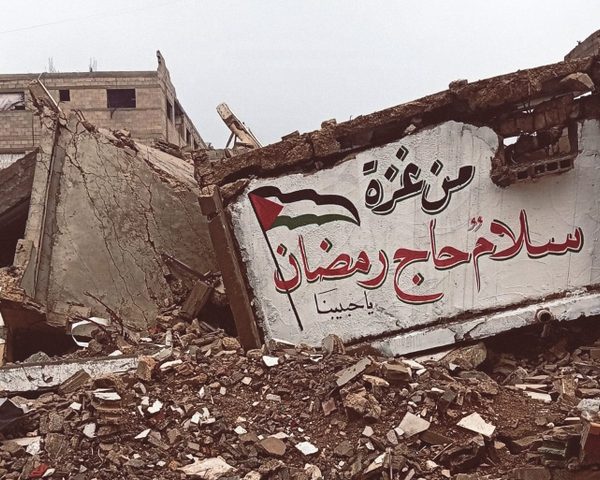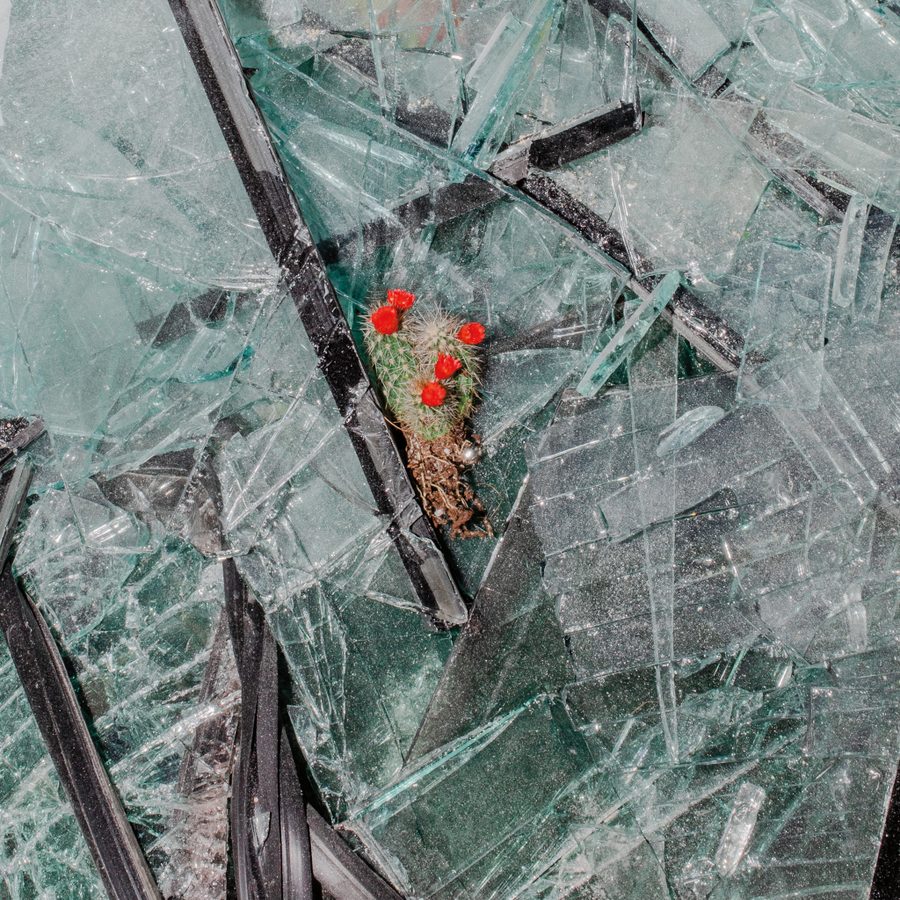

On October 13th, 2019, the photographer Myriam Boulos looked out from her balcony and sensed that something was afoot. There was, she knew, a general air of instability—throughout Lebanon, people struggled to access basic services like water, electricity, and sanitation—but later she would come to realize that she was also intuiting a newly unfolding catastrophe: At that very moment, wildfires were erupting across the nation’s forests. Four days later, as government neglect stalled containment and recovery efforts, the Lebanese cabinet announced new financial measures, among them legislation that further insulated the wealthy. Protests broke out, inaugurating a series of uprisings against the state’s fatal austerity and corruption. “It felt as if we were coming out of an abusive relationship to finally say: No, this is not normal,” Boulos writes of the events that would eventually be known as the October 17 Revolution. “Since then, everything has been emotionally and physically draining and confusing but also beautiful, sad and awakening.”
For Boulos, the revolutionary moment instigated a way of seeing, dilating the vivid contradictions that animate social worlds in the midst of radical transformation. What’s Ours—a series of photographs taken between 2013 and 2023 and collected into a book of the same name (Aperture, 2023)—realizes the possibilities of this form of perception. In sensuous and caustic images, Boulos documents the multifariousness of contemporary life in Lebanon. The project’s titular insistence on populist solidarity, however, should not be mistaken for didactic certainty: “Lebanon is so fragmented . . . that I personally have trouble grasping what us refers to,” Boulos explained in an interview. Indeed, What’s Ours juxtaposes such markedly discrepant scenes as a stripper suspended upside-down on a pole at a nightclub, a group of soldiers gazing at something just outside the image’s frame, masked women walking away from a burning building, and the hands of the artist and her grandmother lovingly entwined.
Across the series, Boulos develops a visual vocabulary through which meaning is thrown up for grabs. In one image, hundreds of men stretch their hands toward the night sky, confetti filling the air. They appear to be taking part in a celebration—but because Boulos shows us this photograph alongside depictions of militarized repression and popular uprising, the otherwise carefree scene assumes a layer of gravitas: The gold glitter falling from the sky rhyme with the debris from explosions; the coordinated gestures of the revelers recall other cohorts engaged in forms of choreographed sociality, like soldiers or protesters. In another image, a cloud of hookah smoke obscuring the face of a man lounging on a lawn chair recalls the haze of tear gas. Like the uprisings themselves, these images probe the porous boundaries between everyday life and ruptural transformation.
But while harsher references persist across the series, a tenacious tenderness emerges as the dominant note. Consider the astonishing portrait of a young woman posing in front of a blown-out window. She is wearing a mask—perhaps to protect herself from Covid-19, or from toxic chemicals emanating from the ruined city visible in the background. What strikes me is not the debris of Beirut, but the sybaritic quality produced by the rich interplay of textural and chromatic elements: the folds of the woman’s soft, pink trousers; the smoothness of her white tank top against her tan shoulders; the delicate tattoos decorating her bare arms; the jagged, beige rubble of the city. Like so many of Boulos’s images, this portrait registers the thick experience of revolutionary time.
The photographs in What’s Ours cannot be reduced to a unified meaning. Here there is no singular subject, no figure on high to prescribe the coming future. Instead, these pictures harness the throbbing urgency of riots and raves, immersing the viewer in a rapturous present tense, where all manner of transgressions—queer intimacy, state repression, imperial violence—jostle in recombinant relation. Where Boulos refuses the illusory comfort of a salvific authority, she offers in its place an affirmation of what we make together, consecrating, again and again, the promise of human connection. Every revolution, after all, begins and ends with the body.
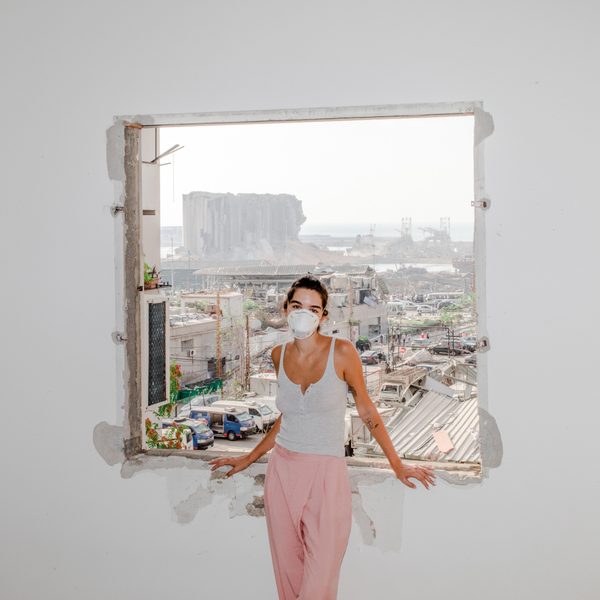
Nour couldn’t listen to music for weeks after the explosion.
Beirut, August 6th, 2020
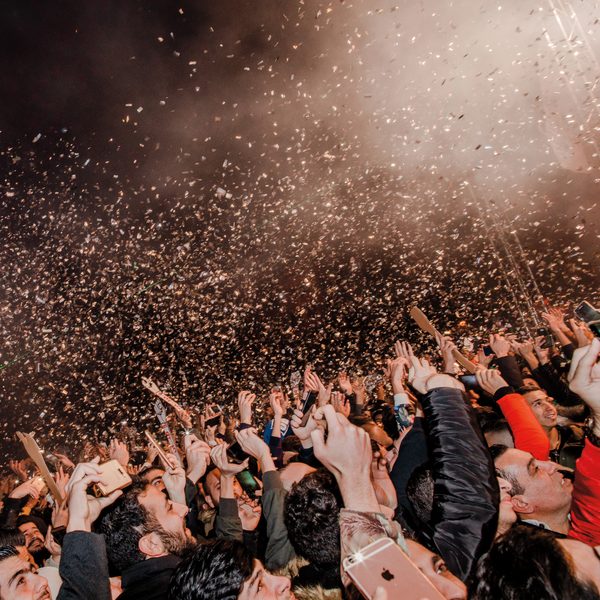
Beirut, December 31st, 2019
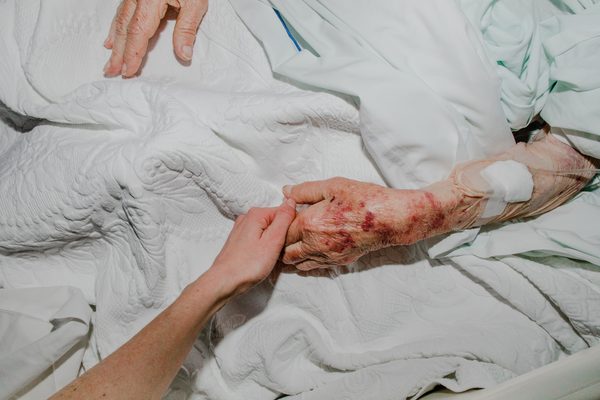
My grandmother is at the hospital.
February 15th, 2020
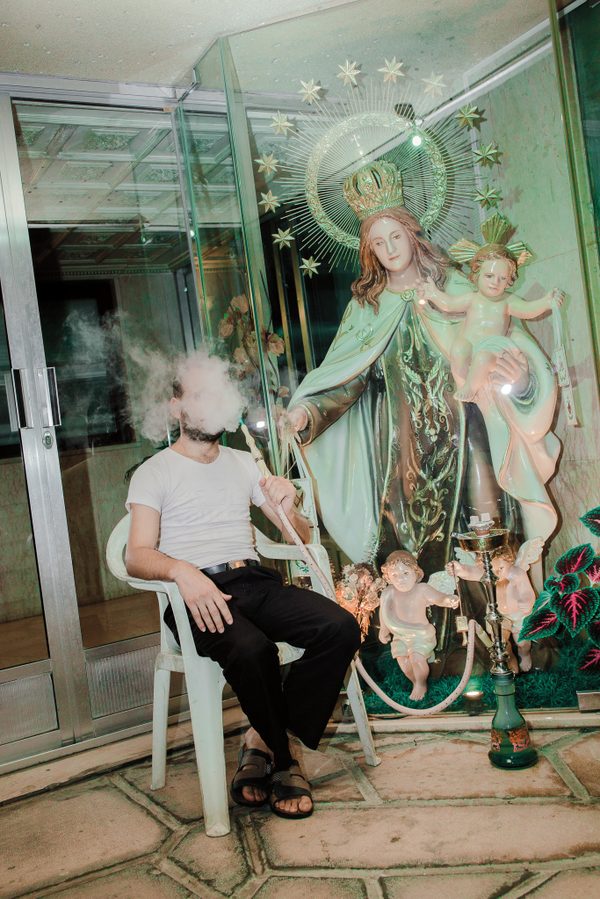
Beirut, July 6th, 2018
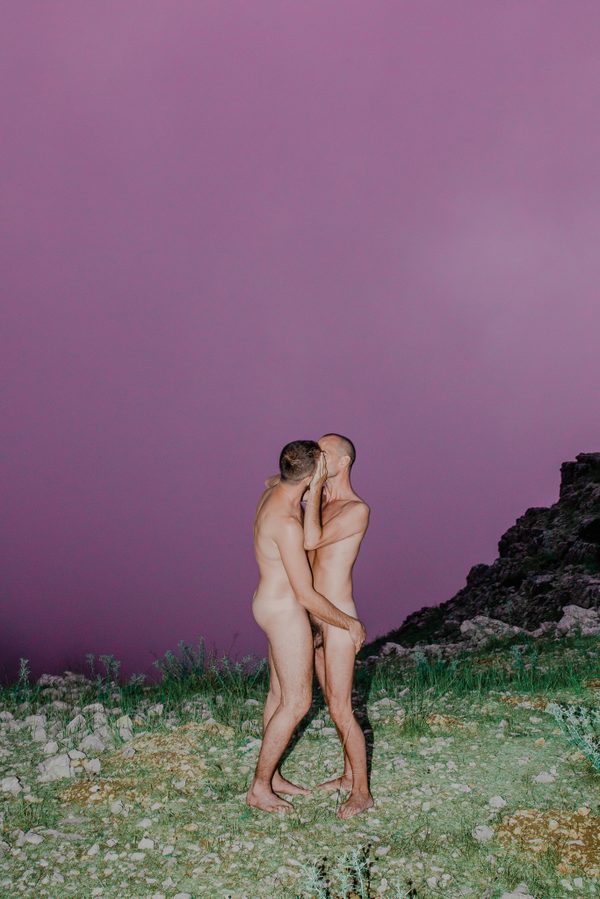
Beirut, September 5th, 2019
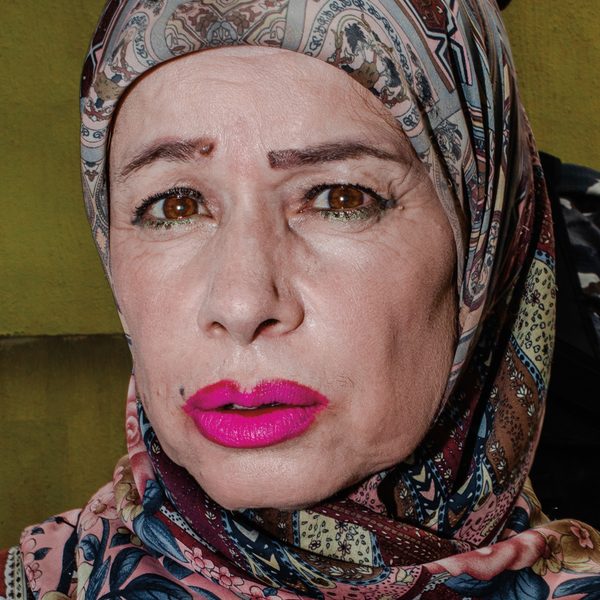
Ghazwa during a protest for women’s rights
Sour, March 23rd, 2021
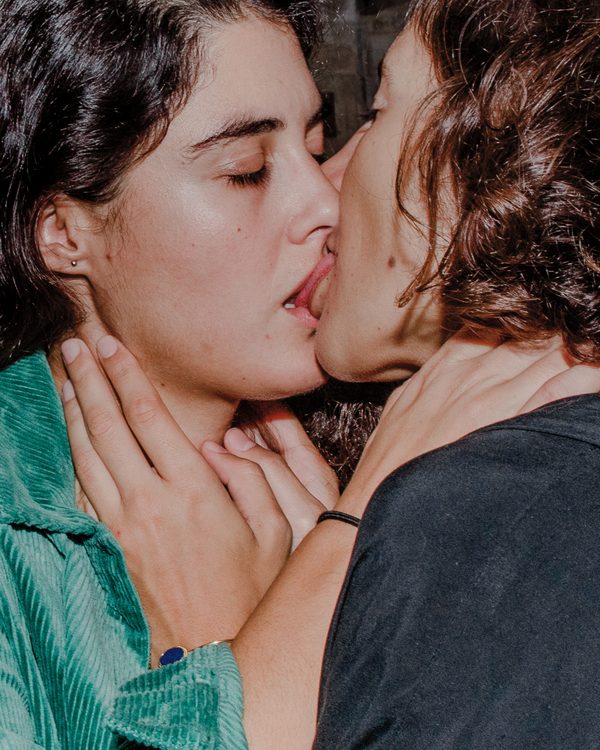
Jasmine and Laura-Joy kissing in the grand theater
Beirut, October 20th, 2019
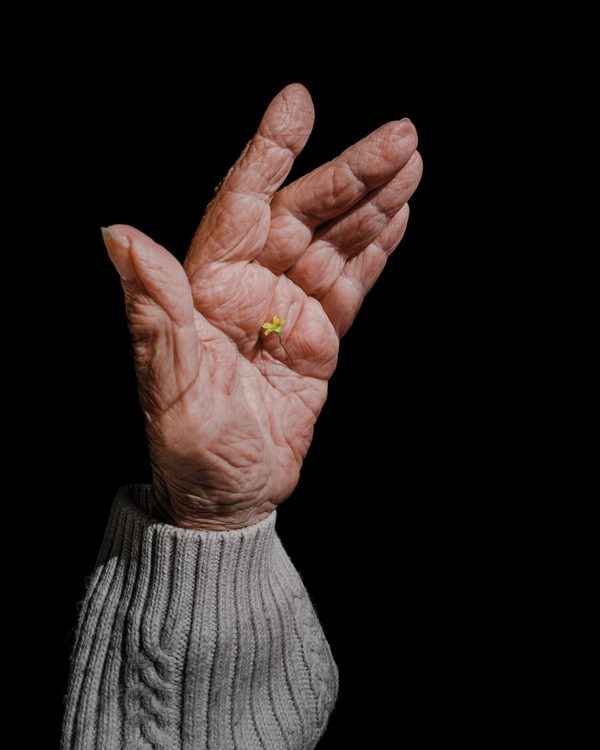
When I gave her this tiny flower, my grandmother told me “Dis aux arbres de sourire,” which means tell the trees to smile.
Dahr El Souwwan, February 21st, 2021
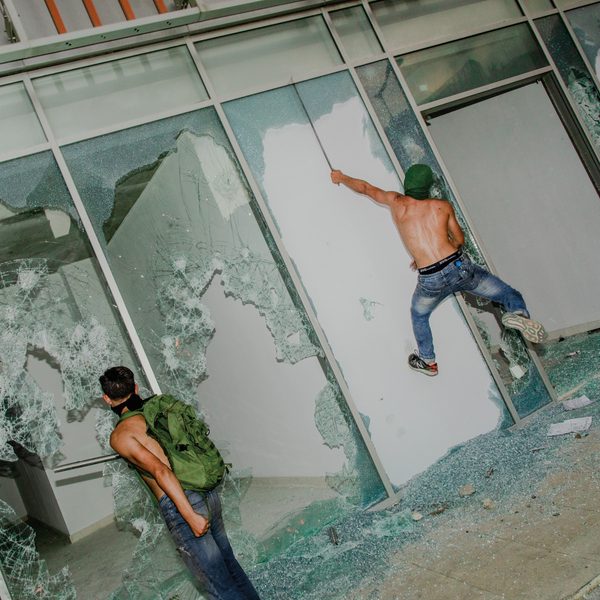
Fire and glass spoke to me more than well-articulated slogans.
Beirut, October 18th, 2019
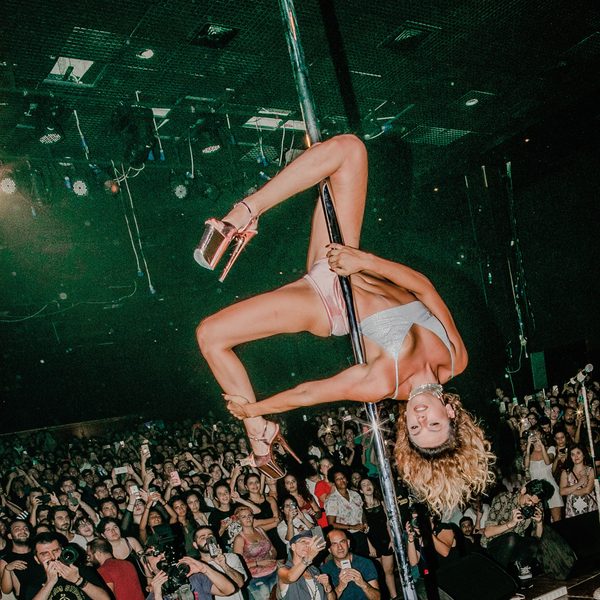
Beirut, 2020
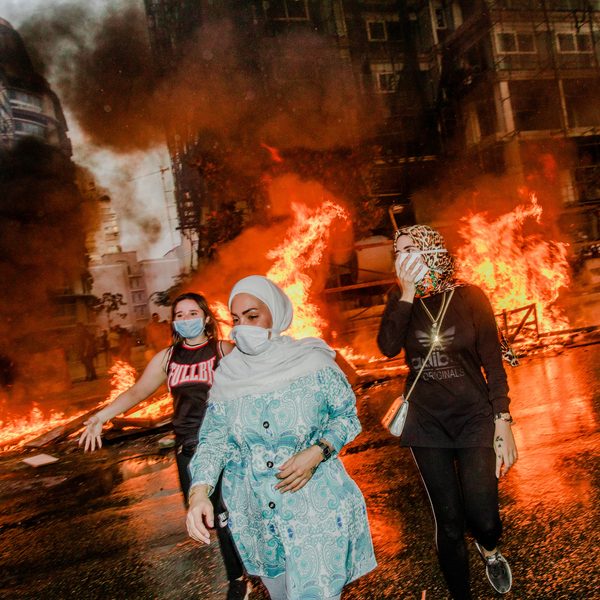
Beirut, October 18th, 2019
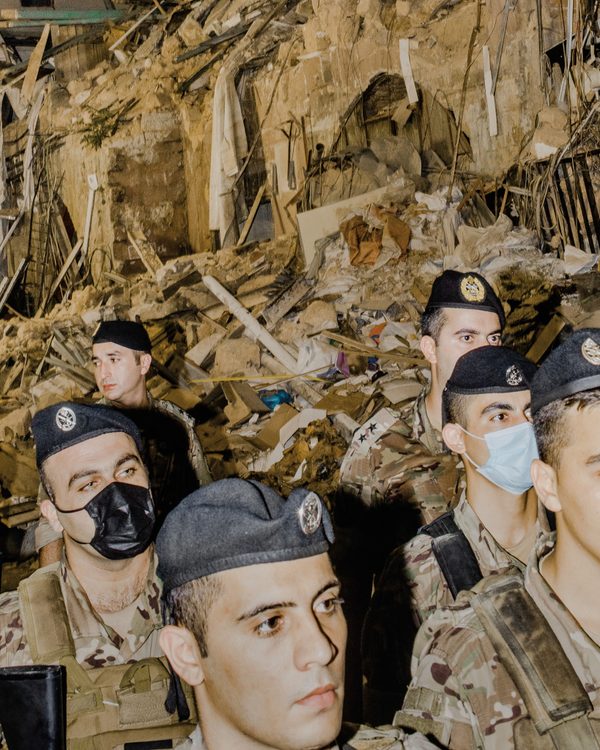
That night we thought there was a heart beating under the rubble.
Beirut, September 4th, 2020

I’m Arielle Angel, editor-at-large of Jewish Currents. Before you go, there’s something I need to ask.
We’ve seen over and over how the mainstream media falters in telling stories on our beats—whether it’s antisemitism, Israel/Palestine in American politics, Jewish identity, or the American left. At Jewish Currents we’re committed to uncompromising analysis and longform reporting on these issues and more—stories you won’t find anywhere else. In a media landscape that obscures injustice and flattens discussion, we’re changing the conversation. But we need you.
If you believe in this work, please consider making a donation—or even better, a recurring one—to ensure that we are able to keep publishing stories like this one. We can’t do it without you.

Aria Aber is a contributing editor at The Yale Review, the poetry editor of Kismet, and an assistant professor of creative writing at the University of Vermont. She is a recipient of the Prairie Schooner Book Prize and a Whiting Award, and her debut novel Good Girl (Hogarth, 2025) was shortlisted for the Women’s Prize.