The Upper Room
Coleman Collins’s exhibition considers how attempts at making a new world risk reproducing the cruelties of the old.
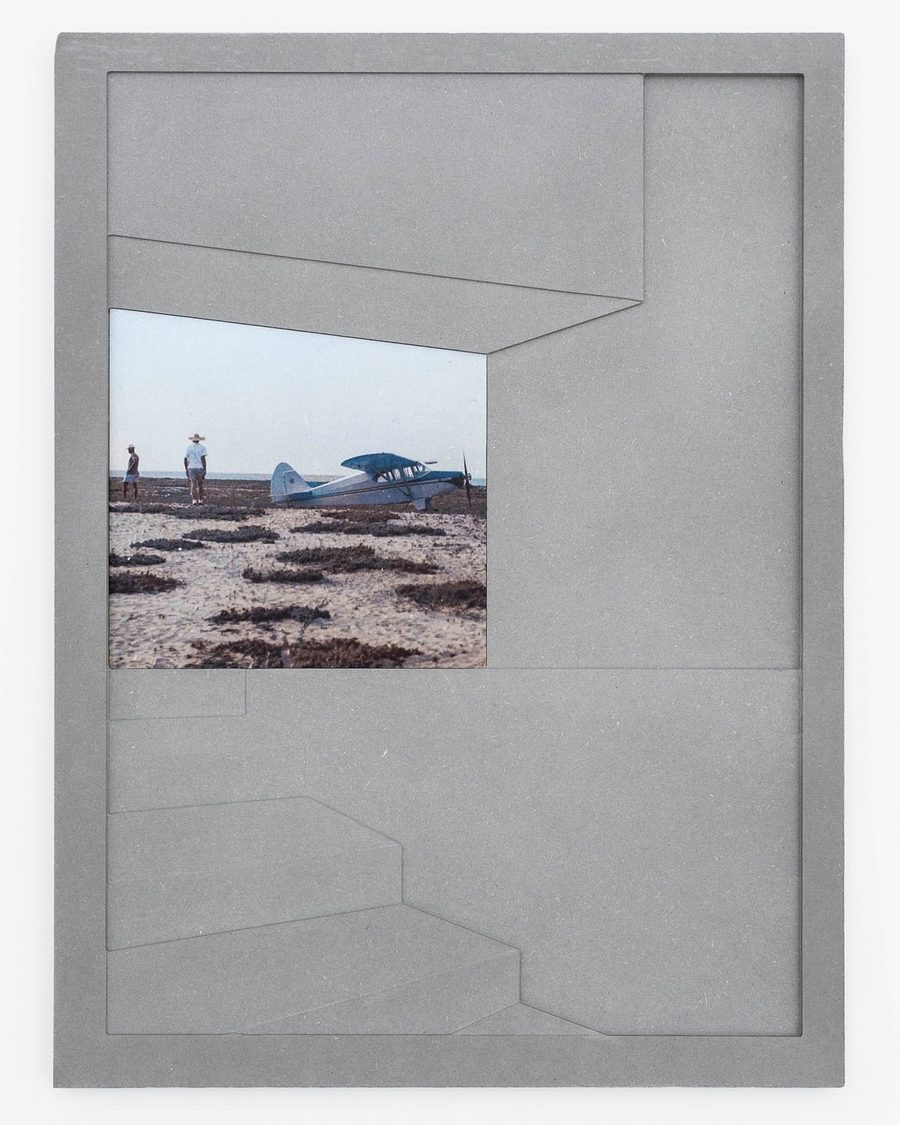
Coleman Collins:
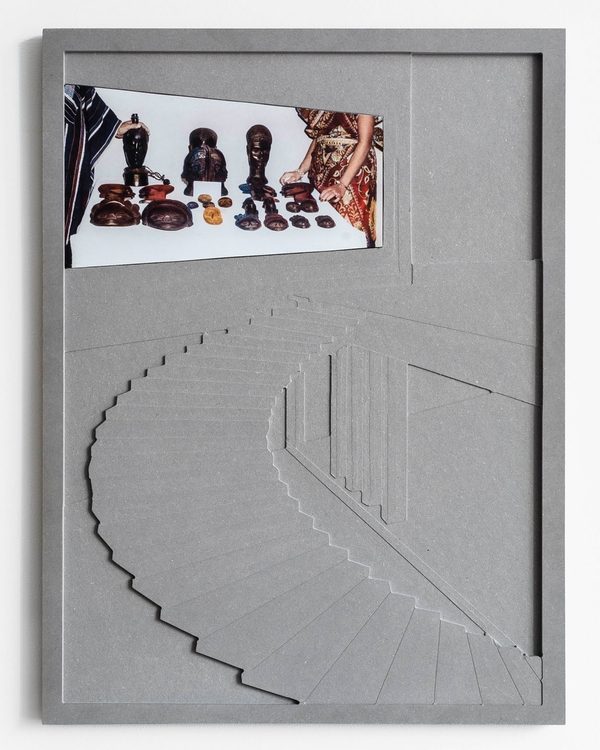
Untitled (Hotel Africa), 2025
Engineered wood, UV print on Dibond
18 x 24 in

On screen, a plantation burns, while a voiceover by the artist verifies a feeling: “For us in particular, there was no hope,” not in what “I would (begrudgingly, unfortunately) describe as my homeland.” My satisfaction at witnessing this classic iconography of escape is tempered, though, by the encroachment of a certain uncanniness. Our speaker’s voice is deep and somber and familiar, definitely black; that is to say, it resonates beyond both pop culture’s fixed repertoire of staid signifiers and the speaker’s own denotative claims. What are you really after? I wondered—waiting, not without delighting in the film’s knowing humor, for the conditions of the scene’s strangeness to reveal themselves. Gazing at the too smooth texture, it struck me: Of course, the plantation is AI generated; the scene transformed from one emblematic of escape into an ouroboros of obliteration. I’m reminded of how the massive energy expenditure required for this technology’s supposedly limitless calculations falls upon the planet, and particularly on the same populations ravaged by the plantation; our acquiescence is manufactured for everything from Grok’s incessant revelation of the obvious to a barrage of nonhuman replacements for the kind of love we never learned to practice ourselves.
The film, The Upper Room, is from Coleman Collins’s exhibition of the same name. The show, first mounted last year at Brief Histories in New York City, crystallizes the artist’s inquiry into fraught efforts at absconding from the anti-black capture at the heart of the American project. It orbits several attempts at escape—most robustly the colonization of Liberia, an endeavor by a cohort of “free” African Americans who, in the early 19th century, sought to resettle in the West African territory in order to escape the United States. (Notably, the process was initiated by the American Colonization Society, a group led by white elites who sought to dispense with black people who were, for the moment, not enslaved, as well as to quell rising abolitionist sentiment.) African Americans then subjected Liberians to a series of displacements and humiliations common to any history of colonization. In a series of low-relief fiberboard wall works based on the interiors of Liberian buildings, Collins draws out the architectural resonances between colonized Liberia and the plantation structures that African Americans carried over from the antebellum South. The reliefs are accompanied by archival photographs; most of the images depict interactions between African Americans and native Liberians—such as Liberian artifacts changing hands amid upper class soirées—and some are drawn from the collection of an African American police officer who trained Liberian police. As Collins makes plain, this attempt at revalorizing the norms of Western conquest should make us hesitant about the heroic gestures of any nascent nationalist enterprise.
While these wall pieces amplify the unsettling spatial continuity between the forms of control African Americans sought to flee and those they reproduced in this experiment of escape, the film unmoors the viewer’s relationship to linear time. As Collins’s voiceover sutures archival footage and AI imagery, I feel alongside the narrator a “vague, yet menacing sensation”: This line of flight does not fulfill its promise to wholly leave behind the past for a new future. Nor should it. The unfinished project of freedom is, well, unfinished. Collins’s work refuses the allure of didactic ease and moral absolutism; instead, it offers a poised reevaluation of mimesis, lest we forget, chasing the promise and necessity of flight, that there’s always a chance we might slide back into a celebration at the heart of that same burning building.
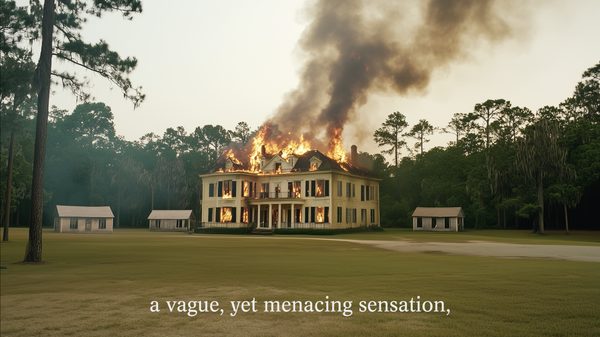
Still from The Upper Room, 2025
UHD video, 20 mins
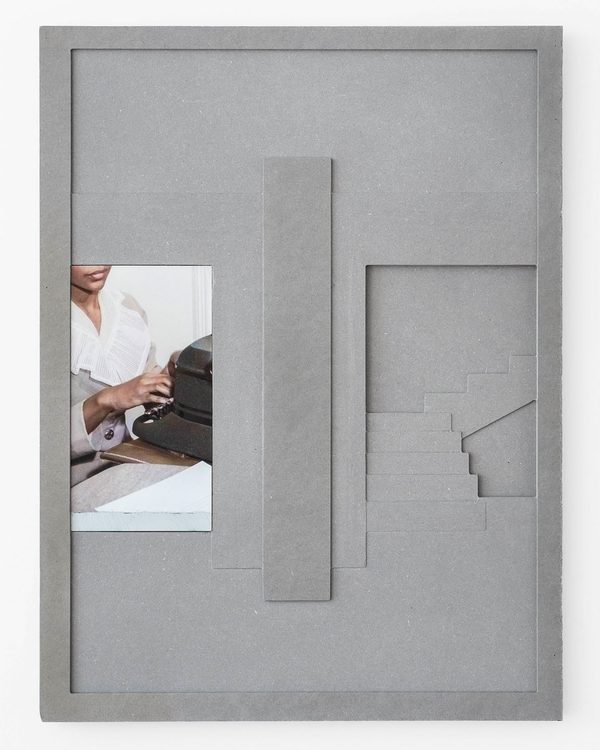
Untitled (Ducor basement), 2025
Engineered wood, UV print on Dibond
18 x 24 in
Untitled (Ducor), 2025
Engineered wood, UV print on Dibond
18 x 24 in

Untitled (EJ Roye), 2025
Engineered wood, UV print on Dibond
18 x 24 in

I’m Arielle Angel, editor-at-large of Jewish Currents. Before you go, there’s something I need to ask.
We’ve seen over and over how the mainstream media falters in telling stories on our beats—whether it’s antisemitism, Israel/Palestine in American politics, Jewish identity, or the American left. At Jewish Currents we’re committed to uncompromising analysis and longform reporting on these issues and more—stories you won’t find anywhere else. In a media landscape that obscures injustice and flattens discussion, we’re changing the conversation. But we need you.
If you believe in this work, please consider making a donation—or even better, a recurring one—to ensure that we are able to keep publishing stories like this one. We can’t do it without you.

Joseph Earl Thomas is the author of the memoir Sink and the novel God Bless You, Otis Spunkmeyer, winner of the Center for Fiction first novel prize.