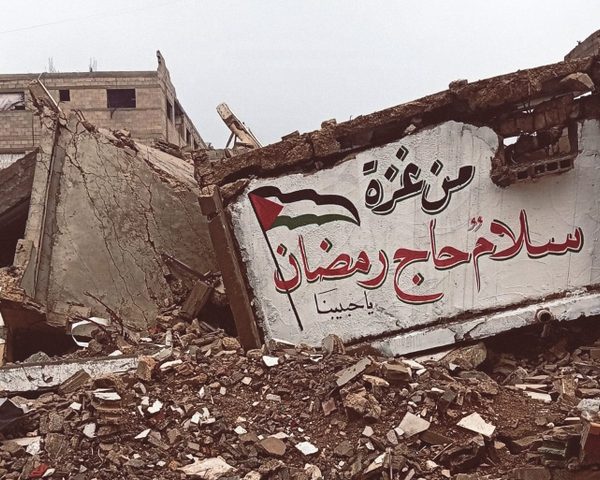
The Betrayal of Light
At the precipice of each instant, two voices speak to me. One says, “You survived.” The other, “It will begin again.”
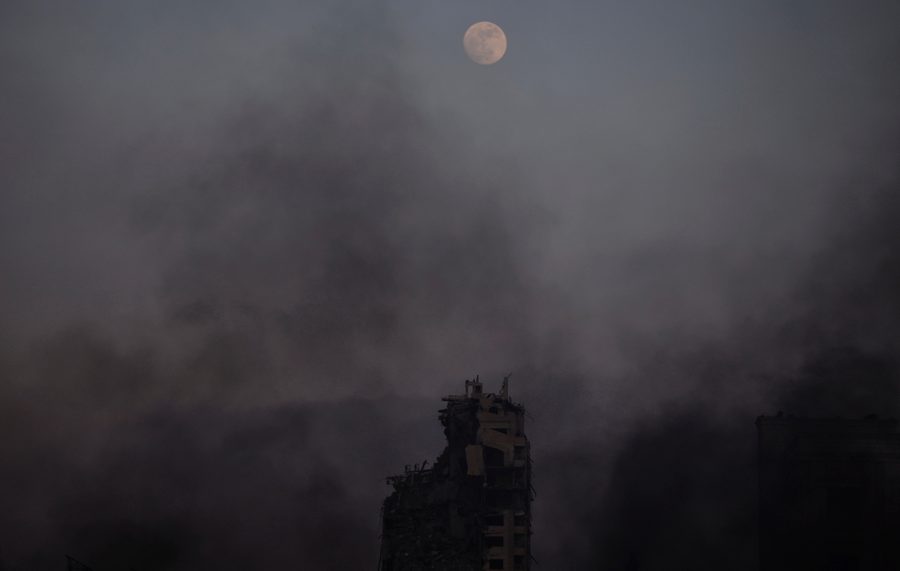
Gaza City, June 2025
I used to wake up to sunlight shining through the window. Now a missile striking two blocks away wakes me. There is no morning anymore—no work, no school, no mealtime. There is only the next instant, and the fear we won’t survive it.
Even the sky in Gaza has changed. The sun rises, but brings no warmth. The night arrives, but offers no rest.
What we call sleep is no longer sleep. It is fatigue with one eye open. We pack our bags. We keep our children fully dressed. Every hum overhead stops our breath. When quiet persists for more than ten minutes, we relax a bit.
On the fourth night of October 2023, the sky lit up. A belt of fire lashed our street. I was lying on the floor beside my brother. We heard screeching. Then nothing. Then dust, and screaming. I saw my cousin’s chest open. His body falling to the ground made a sound unlike any other. My brother and I crawled out from under shards of glass. Half of the building across the street had vanished. We had no time to bury my cousin properly. No cloth. No light. For the first time, I questioned the fairness of surviving. Something froze inside me, then shattered. I didn’t cry. I stayed broken. After all, the war didn’t stop. Rebuilding would only mean readying myself to shatter again.
In a shelter, a child cried for his father who had died the previous morning. His mother, silent and unblinking, held him with arms of stone. “Mama, why aren’t you crying?” the child asked. The mother broke. I wish I hadn’t seen it, her face collapsing like that.
I once studied under a lamp. I read books. I dreamed of life. Now, the glow of my phone makes me flinch. A candle is a target. A match, a betrayal. The drones look for illumination. I remember the night a neighbor’s flashlight cost him his home. The plane circled. Then came the light. Then the ending.
We cover our windows. We speak in whispers. I learn the corners of our destroyed flat by heart. The number of steps between the hallway and the sink. The pattern of cracks on the floor. The smell of burning in the distance.
Children play games of silence. I grab my mother’s hand to make sure she exists. We don’t ask questions anymore. The answers are relentless: Nowhere is safe, no one is whole.
In December 2023, we were sheltering in an industrial area. Tanks circled. No exit. No future. My father said, “Now, run.” I saw the dust under the tanks’ tracks. I smelled their steel. I don’t know how we made it—but that’s all I was left with: the simple fact that we lived, and the feeling of guilt that others didn’t.
I am afraid of light. I am afraid of darkness. I am afraid of stillness. I fear noise. When the blasts stop, I grow more afraid. The silence is only a prelude. Every second feels like waiting. What are we waiting for? We do not know.
At the precipice of each instant, two voices speak to me. One says, “You survived.” The other, “It will begin again.”
A part of me wants to believe in morning. A part of me prepares for another night.
I used to know time as a schedule, a plan, a goal. Now, time is only something to endure.
Sometimes I close my eyes and picture a sunrise that implies coffee rather than fear. I dream of mindlessly opening a window to feel the breeze, of reading a book without the sound of drones overhead. I dream of nights in Gaza as they once were: lovers walking along moonlit streets, children playing. But I do not believe these dreams.
I wonder who I’ll be if this ends. If I will ever again sit near a lamp without flinching. If my children’s children will ever trust the light. There are no metaphors in Gaza. There is only what is gone and what remains—this life between shadows, and the memory of another light.

I’m Arielle Angel, editor-at-large of Jewish Currents. Before you go, there’s something I need to ask.
We’ve seen over and over how the mainstream media falters in telling stories on our beats—whether it’s antisemitism, Israel/Palestine in American politics, Jewish identity, or the American left. At Jewish Currents we’re committed to uncompromising analysis and longform reporting on these issues and more—stories you won’t find anywhere else. In a media landscape that obscures injustice and flattens discussion, we’re changing the conversation. But we need you.
If you believe in this work, please consider making a donation—or even better, a recurring one—to ensure that we are able to keep publishing stories like this one. We can’t do it without you.
Abdullah Hany Daher is a Palestinian writer and journalist from Gaza. He documents the human stories of war, aiming to preserve voices that the rubble cannot silence.