Roundtable: The Ethical Response to Birthright
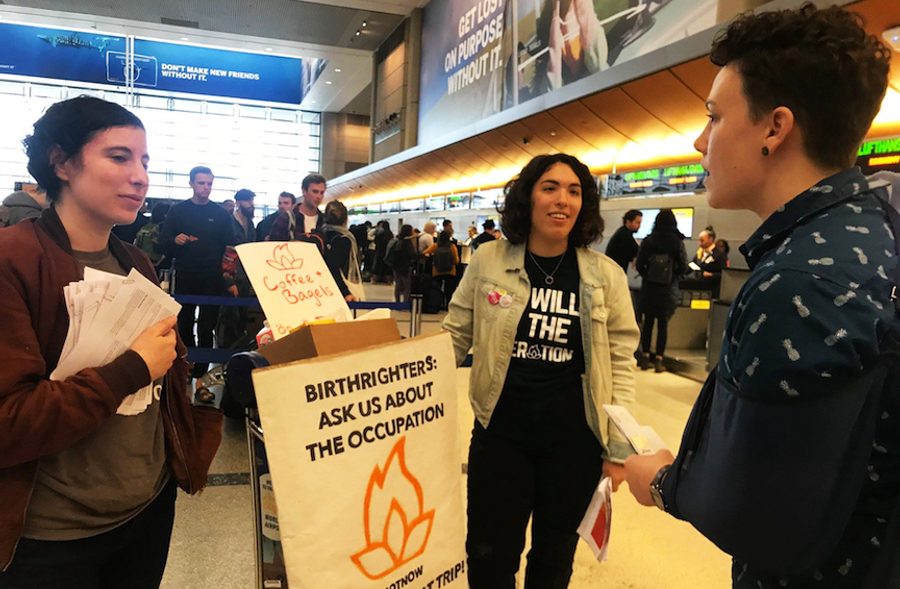
FOR THE PAST TWO DECADES, Birthright has served as one of the most effective propaganda campaigns on behalf of the Israeli government and its occupation of the Palestinian territories. Drawing on funds from megadonors like right-wing casino magnate Sheldon Adelson, every year Birthright sends thousands of young American Jews on free trips to Israel, where they hear a narrative largely in line with the perspective of the Israeli government, and are denied access to Palestinian perspectives. Because these trips are available to all Jews regardless of economic background, and because they are purportedly apolitical, many well-meaning Jewish progressives never think to question Birthright’s agenda.
The emerging Jewish left, which is committed to ending the occupation, broadly agrees that Birthright is a problem, but there is no consensus on how to address it. Should young Jews go on alternative trips for a more balanced perspective? Should they participate in direct action on Birthright trips, despite calls by Palestinian civil society to avoid the trips altogether? What diasporic alternatives might exist that donors could fund instead?
To advance this conversation, Jewish Currents invited a mix of students and activists to weigh in.



I’m Arielle Angel, editor-at-large of Jewish Currents. Before you go, there’s something I need to ask.
We’ve seen over and over how the mainstream media falters in telling stories on our beats—whether it’s antisemitism, Israel/Palestine in American politics, Jewish identity, or the American left. At Jewish Currents we’re committed to uncompromising analysis and longform reporting on these issues and more—stories you won’t find anywhere else. In a media landscape that obscures injustice and flattens discussion, we’re changing the conversation. But we need you.
If you believe in this work, please consider making a donation—or even better, a recurring one—to ensure that we are able to keep publishing stories like this one. We can’t do it without you.