Another Example of Repetition

The insistence on certain beginnings coheres colonial fictions: The story starts with the destruction of the Second Temple. Or, the story starts in 1948. Or, the story starts on October 7th, 2023. The frame’s hard edge secures the protagonist: Look, this is the proprietor of the complete story; we move forward from here. Yet, for those whose histories are brutally fragmented by these claims to a singular order, there is a rupture in the root that binds time and narrative. “When a Palestinian is asked to retell their experiences, there is always this moment of hesitation . . . Where to start?” the writer Adania Shibli explains. “A stutter in narration.”
Like the back side of an embroidery, Fady Joudah’s “Another Example of Repetition” exposes the traces a tidy picture requires but seeks to suppress—in this case, the denials necessary to produce the fiction of newness. “In a world where the news commits genocide, / one should not report the news after Gaza,” Joudah writes. On a quick read, the thrust feels clear: When the relentless Zionism of mainstream media has made way for mass murder in Palestine, these narrative forms must cease. But the poem unsettles its own terms; it will not simply move forward. What would it even mean, I find myself wondering, to think of a world “after Gaza”?—a hitch that sends me stumbling back to the poem’s opening lines: “As chronounit, an eon’s bond with letting / bygones be bygones brings me little comfort.” There is no solace here in the passage of time; time, in fact, will not pass. Instead, we are left with something closer to Shibli’s stutter: an act of return guided by that which language cannot contain.
— Claire Schwartz
Another Example of Repetition
As chronounit, an eon’s bond with letting
bygones be bygones brings me little comfort.
In a world where the news commits genocide,
one should not report news after Gaza.
But let’s let after come first
and then the disposer shall dispose.
Meanwhile sanguinity is swinging
songs during smoke-filled galas
in cities that move images as Gods
move mountains. The life force
dominates the confidence interval
and keeps us thinking it’s we
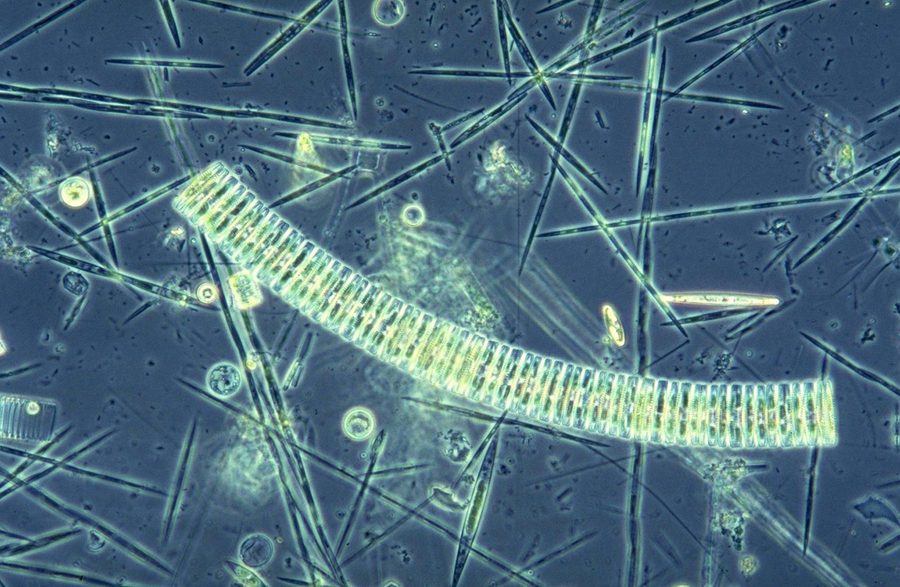
who keep life alive. But thank you plankton,
primal drifter, defenseless Prometheus
against your home
when your home turns against you.
Thank you for willing oxygen into being
so that light is harnessed.
So that light is harnessed
and oxygen ignites of its own accord
in collusion with nothing of your doing.
Whatever plankton was
it has come back to speaks its truth.
To think, to make think and tank it.
The news commits my genocide.
Who here is without news?

I’m Arielle Angel, editor-at-large of Jewish Currents. Before you go, there’s something I need to ask.
We’ve seen over and over how the mainstream media falters in telling stories on our beats—whether it’s antisemitism, Israel/Palestine in American politics, Jewish identity, or the American left. At Jewish Currents we’re committed to uncompromising analysis and longform reporting on these issues and more—stories you won’t find anywhere else. In a media landscape that obscures injustice and flattens discussion, we’re changing the conversation. But we need you.
If you believe in this work, please consider making a donation—or even better, a recurring one—to ensure that we are able to keep publishing stories like this one. We can’t do it without you.
Fady Joudah, recipient of the 2024 Jackson Poetry Prize, is the author of six poetry collections, most recently […], a finalist for the National Book Award in 2024.