Do You Know . . .
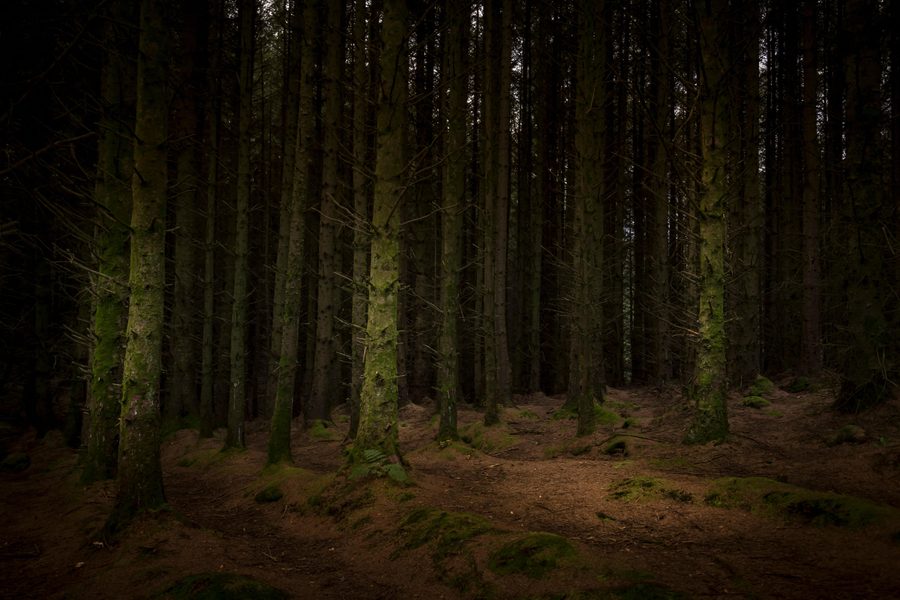

When the Romanian poet Selma Meerbaum-Eisinger wrote “Do You Know . . .” in January of 1941, she was just shy of her 17th birthday. About six months later, German troops would invade her hometown of Czernowitz; they soon forced her family, along with the rest of the city’s Jews, into a ghetto before deporting them to the Michailowka labor camp, where she would die of typhus. Prior to all this, though, the young poet living in a nation on the edge of human-wrought catastrophe trained her gaze not on the cruel dramas of human beings, but on the brutal realities—and expansive possibilities—of the natural world. As Meerbaum-Eisinger attunes us to the shrieking raven, the weeping rain, “the night, pale with fear,” we find ourselves in a habitat devoid of certain respite. Yet even while we confront a haunted environment, a sliver of something approaching hope shines through. In the act of careful noticing, the speaker finds a kind of companionship: Like the forest and the raven, she is frightened, and like them, she wonders, “Is this my kingdom, is this not my kingdom?” Their collective condition may indeed be one of terror, but through a series of questions—which, after all, resist fixity in their very syntax—Meerbaum-Eisinger leverages the resources of this damned world toward an opening, the possibility of a fundamentally different future.
– Carlie Hoffman

I’m Arielle Angel, editor-at-large of Jewish Currents. Before you go, there’s something I need to ask.
We’ve seen over and over how the mainstream media falters in telling stories on our beats—whether it’s antisemitism, Israel/Palestine in American politics, Jewish identity, or the American left. At Jewish Currents we’re committed to uncompromising analysis and longform reporting on these issues and more—stories you won’t find anywhere else. In a media landscape that obscures injustice and flattens discussion, we’re changing the conversation. But we need you.
If you believe in this work, please consider making a donation—or even better, a recurring one—to ensure that we are able to keep publishing stories like this one. We can’t do it without you.
Selma Meerbaum-Eisinger (1924–1942) was a Jewish, German-language poet from Bukovina. On December 16th, 1942, she died of typhus in the Michailowka labor camp. She is the author of Blütenlese (Harvest of Blossoms).
Carlie Hoffman is the author of This Alaska (Four Way Books, 2021), the founder and editor-in-chief of Small Orange Journal, and a Lecturer in Creative Writing at Purchase College, SUNY. Her second collection is also forthcoming with Four Way Books in 2023.