A stone with wings

By the time I came to translate The Town I Never Told You About, the 11th poetry collection by esteemed Palestinian writer Ghassan Zaqtan, I had developed a flickering hesitancy regarding his work. It’s a strange feeling—something like the split-second reluctance to jump at the pool’s edge, or the shiver of uncertainty that surrounds touch when static is in the air—summoned by his singular aesthetic. His poems feel haunted and magical. Populated with the dead, with landscapes and interiors that unfurl into maps of tangled paths, passages, and hallways, they form what Fady Joudah, whose translations first brought Zaqtan’s oeuvre into the Anglophone consciousness, has aptly called a “chimeric architecture.” Like trees, Zaqtan’s poems are both passively monumental and restlessly branching, teeming with life.
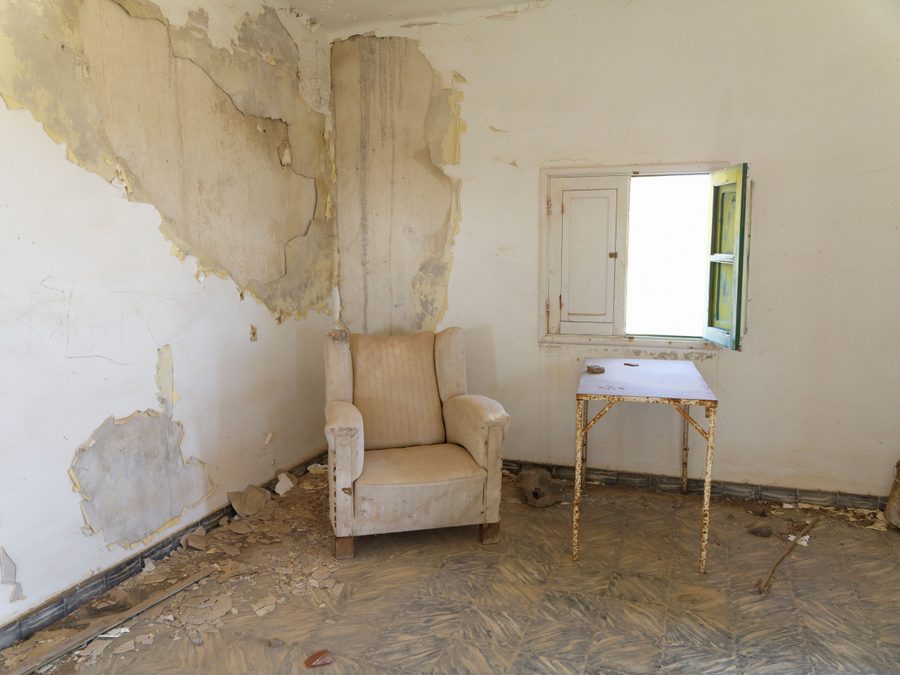
“A stone with wings” ushers us into a series of elusive spaces where the still and heavy air is at once dreamlike and oppressively real: a “bare room” with “a wooden record player,” an “empty hall” that houses “an old black piano.” Even the light here, striking and belting, has weight. As the poem orbits a letter that is to be written even as it seems unwritable, permanently suspended in the speaker’s search for “serviceable furniture to pack into [it],” lulling rhythms and sonic recursions at once carry and burden the air, the breath. “This is waiting, too; / waiting taken shapes that wait,” Zaqtan writes, the text seeming to move not forward, but in circles, looping tighter and tighter as it comes to an end—an end that, it turns out, only sends us back to the title. The “stone with wings” becomes a touchstone and portal through which we reenter the poem to find it remade as the letter itself. This missive is, we now see, “only / a waiting that has learned to walk.” What, then, of this waiting? The memories stirred by its “dry branch” are the very stuff of life; in their loss, they are irrepressible. “A chair goes on growing in a bare room”: an ars poetica, a talisman of defiance against erasure.
– Robin Moger
Listen to Ghassan Zaqtan read "حجر بجناحين" in Arabic.
Listen to Robin Moger read "A stone with wings" in English.
(English follows the Arabic, below.)
أبحث عن أثاثٍ صالحٍ في ذكرياتنا لأزجّه في رسالةٍ الانتظارُ هو قطعة الأثاث الكبيرة هناك. مقعد يواصل النمو في غرفة عارية. الحاكي الخشبي في الزاوية البعيدة محاطٌ بأزهار بلاستيكية وهو يدور ويخشخش في الفراغ. البيانو الأسود القديم في القاعة الفارغة، المضروب بضوء العصر، حزمة الضوء أصابت مقعد العازف وأضاءت الغبار على سطح الماهجوني. هذا هو الانتظار أيضاً. الانتظار بهيئاته التي تنتظرُ هو كل ما أجده كلما ذهبت لأحضر أثاثاً للرسالة. المقعد الذي ينمو في غرفةٍ عاريةٍ الحاكي الذي يخشخش والبيانو الذي يحدّق في قاعة فارغة. ليست الرسالة يا سارة سوى انتظار تعلّم المشي. تمارين الذهاب تذكّر أشياءٍ لم تحدث. ثم ما هو الانتظار يا سارة سوى غصن جاف نحرّك به الذكريات لتصبح أحلاماً. الانتظار، يا سارة، حجر بجناحين.
I search our memories for serviceable furniture to pack into a letter; there, waiting is a vast piece of furniture. A chair goes on growing in a bare room. The wooden record player in the far corner is ringed by plastic flowers as it spins and hisses into the emptiness. The old black piano in the empty hall, is struck by the evening light: the light belts the player’s chair, lights the dust on the mahogany case. This is waiting, too; waiting taken shapes that wait—what I find when I go to gather furniture for the letter: chair that grows in an empty room, record player hissing, piano staring down an empty hall. The letter, Sara, is only a waiting that has learned to walk, drills for departure, remembrance of things that never happened. Then, what is waiting, Sara, but a dry branch with which we stir our memories into dreams? Waiting, Sara, is a stone with wings.
Reprinted from The Town I Never Told You About: Poems, 2022–2024 by Ghassan Zaqtan. Translation copyright © 2026 by Robin Moger. Reprinted with permission of Seagull Books.

I’m Arielle Angel, editor-at-large of Jewish Currents. Before you go, there’s something I need to ask.
We’ve seen over and over how the mainstream media falters in telling stories on our beats—whether it’s antisemitism, Israel/Palestine in American politics, Jewish identity, or the American left. At Jewish Currents we’re committed to uncompromising analysis and longform reporting on these issues and more—stories you won’t find anywhere else. In a media landscape that obscures injustice and flattens discussion, we’re changing the conversation. But we need you.
If you believe in this work, please consider making a donation—or even better, a recurring one—to ensure that we are able to keep publishing stories like this one. We can’t do it without you.