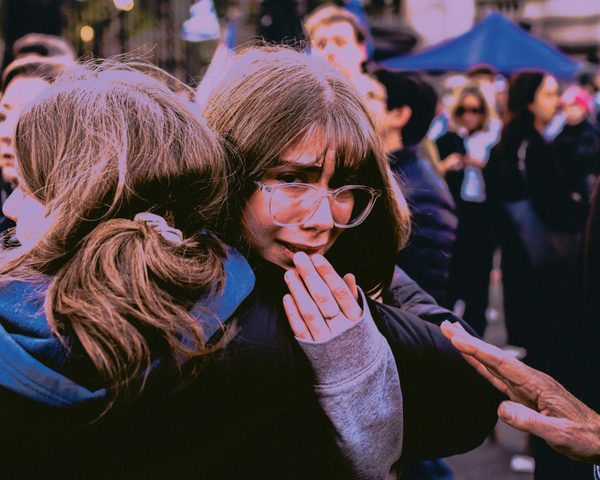
The Measure of the World

By attending to the vibrant specificity of Black life, poet Dionne Brand contests the cruel mathematics of empire.
Dionne Brand in New York.

At the opening of Dionne Brand’s 2001 book A Map to the Door of No Return, the poet is 13 years old and in pursuit of a name. What were they called, she wondered, the people she’d come from? Who had they been before they’d arrived in Guayaguayare, the fishing village in southeastern Trinidad where Brand was born in 1953—and where the sea, it seemed, “had brought the whole of [the village] there from unknown places, unknown origins”? A name promised to illuminate a map; by proffering some fixed key, a name would clarify her coordinates. Again and again, the teenager pestered her grandfather, who’d said that if he heard their people’s name, he would know it. “Yoruba? Ibo?” she offered. “Ashanti? Mandingo?” For weeks, she asked. Each time, he said no. He would not make of language a palliative substitute for absence—would not concoct for the child a myth of origin, by which the bounds of kin can be scripted, territory claimed. Eventually Brand stopped asking. The disappointment soon “gathered into a kind of estrangement.” The rift was not merely personal. It was, she writes, “a rupture in history, a rupture in the quality of being”; it “revealed a tear in the world.”
The tear disclosed by the missing name was the door of no return, the door captured Africans passed through as they were loaded onto slave ships bound for plantations across the Atlantic. The door is real in a material sense: You can visit it, for example, as hundreds of thousands of people do every year, in Ghana or Gorée Island, where a tour guide will usher you through barely ventilated dungeons toward the eponymous threshold. But the transatlantic slave trade did not only radically reorganize material conditions; it also, Brand writes, inaugurated a “cognitive schema,” a way of understanding the order of things. In the world plantation slavery composed, life in the Black Diaspora is “lodged in a metaphor”—constrained to serve as a resource for white heroism, white protagonism, white meaning.
By writing about this indelible transformation at the door, Brand aimed not to court some salvific “before,” but, as she notes in the foreword to a new edition of the book issued in the United States last fall, to “credit the knowledges deposited there.” Facing the “virtuosity and despair” of those who have made lives in excess of empire’s rigid prescriptions, Brand refutes what the literary scholar Ian Baucom calls the “alinguistic grammar of commensurability” honed through the slave trade—the schema in which each Black life can be reduced to the numerical: described in terms of a monetary equivalent, represented as statistical evidence of deviance in anthropology textbooks or as inconsequential collateral in progress’s forward march. Instead, she elaborates “a grammar in which Black existence might be the thought and not the unthought,” as she puts it in her 2017 poem “An Ars Poetica from the Blue Clerk.” A Map to the Door of No Return therefore constellates traces from the wider world that repudiate the door’s restrictive orders: the five thousand mile migration route of the rufous hummingbird, charted before the activities of “all known map-makers”; the expression that comes over the face of a child in Saint Lucia when a woman calls her name, “a look like being needed somewhere not for anything except to fill a familiar space on a lap”; the languid humor of the Ethiopian attendant at the Toronto car park, disrupting Brand’s brusk clip en route to a gala. In this way, the book, Brand explains in the foreword, is an effort “to put the accumulated, daily, lived experiences back together, to detail the minor acts, in any day, under fracture, under force, under pressure.”
Since its publication, this careful act of suture has vitally informed a generation of Black study. “In Brand’s work, the political cannot be separated from the aesthetic,” the scholar Saidiya Hartman, a friend of Brand’s, explained to me. Refusing to accept convention—whether genre or any other social formation—as an unchangeable given, Brand probes our habits of arrangement, and rejects the customary conflation between dominance and rightness. In the space of that cleavage, a cohort of writers found what Canisia Lubrin, a friend and former student of Brand’s, characterized to me as “permission”; once she read Brand’s work, Lubrin, who came from Saint Lucia to Canada, where her proclivities diverged from those of her classmates, found that a “lack of trust in myself was cured.” As Brand’s work has traveled widely, both within and beyond the academy, her writing has been recognized with numerous major honors—among them the Governor General’s Award for Poetry and the Windham-Campbell Literature Prize. From 2009–2012, she served as the poet laureate of Toronto, the city she’s called home for 55 years.
The recent reissue of A Map to the Door of No Return coincided with the release, in both the US and Canada, of a new book of nonfiction, Salvage: Readings from the Wreck. The work tells of “a life animated but also destroyed by books”—of schooling in the colonial literature of the British canon, and of an extracurricular education in art from Black traditions that offered instruction in “how to imagine and make real something like freedom”; that is, Brand’s life. But the book’s autobiographical element is, the writer cautions, “not an invitation to witness transparency.” Rather, what appears of her life has been “pored over, turned over, analyzed, refashioned as art, and made theoretical through those processes.” Her work is autobiographical only in the sense—she quotes literary scholar William Boelhower’s reading of Marxist philosopher Antonio Gramsci—that autobiography describes “the smallest unit of analysis capable of understanding subject and object caught in the processes of biological and historical change.”
Last summer, in anticipation of these two signal publications, I went to Toronto to visit Brand. I wanted to learn more about this orientation toward the minor; I was starting to glimpse the way that an attention to “the smallest unit”—an individual life, a specific gesture, a single line—suffuses the writer’s 24 books, which include nonfiction, novels, and the 12 collections of poetry at the core of her practice. As Brand and I walked down Ossington Avenue, in the poet’s West End neighborhood, she swept her hand in front of her to indicate our bustling surroundings. “Only in something like the dominant form of the novel is all of this arranged linearly,” she reflected. I watched a gaggle of teenagers talking and laughing, then a woman bending to tend to a child, as Brand continued, speaking as she writes—with the exacting clarity of someone practiced at turning over each word, shaking off the sediment: “What if you were to give each element its discrete thought, its discrete style, its particular imaginings? That’s what you tap into to compose lines of poetry, the separate and tiny concerns arrayed in the everyday which somehow come together in the big life of the world.”
From early on, Brand understood herself to be part of this big life. Born into what she described to me as a “highly politicized” family, she came of age in a world animated by revolutionary swell. Meaning was contested, open; no single story of the past ordained the future. But “each decade brought its own shifts,” as she put it in a lecture published in 2008 as A Kind of Perfect Speech—and by the time the poet was 30, the sense of expansive possibility had dissipated. Liberation struggles had been quashed through repression or dispelled through incorporation into the new global common sense of the neoliberal order. “To sustain poetry in the absence of its radical muse—left collective political action—to sustain poetry when there is no inspiration, that was my work,” Brand said. As history barreled ahead, mapping death’s routes, Brand found in poems a way to keep alive the materials of revolutionary desire—the longing, as she writes in A Map to the Door of No Return, “to feel as if history was not destiny.” Over nearly five decades of published writing, the poet has tended to the variegated particulars of Blackness disavowed by imperial regimes; in so doing, she rebukes the order in which meaning always narrowly precedes Black life. Where the colonial world asserts its hold, Brand has refused its pretense of total domination, looking instead after the “small space [that] opened in me” when her grandfather did not know their ancestral name—an aperture through which to glimpse a different order, the makings of a still-open future.
“To sustain poetry in the absence of its radical muse—left collective political action—to sustain poetry when there is no inspiration, that was my work.”
As Brand recalls in Salvage, she spent her early years immersed in the British literature of the 17th, 18th, and 19th centuries. This canon summoned her to attend eagerly to the romps of Robinson Crusoe—in which “very good success,” the reader understands, euphemizes wealth accrued by selling people as slaves—and solicited her admiration for Amelia Sedley in Vanity Fair, whose “silence, inaction and vapidity” against a backdrop of colonial exploitation signified “good character.” These texts made clear just whose lives had worth. Crusoe was the protagonist, his life endowed with meaning; he would, Brand knew from the outset, survive. On the other hand, Vanity Fair’s Miss Swartz, “the rich woolly-haired mulatto from St. Kitt’s,” was, even to her child’s sensibility, immediately apprehensible as “without future in the narrative.” Such figures, Brand writes, “enrich the text in crucial ways, but they do not live.” Their value having been set, their meanings fixed, the Black characters are drafted in service of a social order in which their inclusion is contingent on performing the attributes they’ve been assigned.
Even novels that putatively sought to critique the world’s anti-Black arrangements actually reinscribed them. Brand writes about Aphra Behn’s Oroonoko, or The Royal Slave (1688), which tells of a prince from the region now called Ghana, who is kidnapped and sold onto a plantation in Surinam, where he organizes a revolt among his fellows. In the century and a half that followed, white anti-slavery advocates hailed Behn’s text as the first abolitionist novel. However, Oroonoko rebels, Brand notes, not because he detests the institution of slavery, but because he realizes that the Cornish slaver who captured him does not intend to make good on his promise to release him; “a personal demand for freedom, a special demand, is reneged on.” For this insurgence, he is killed. What is at stake in Behn’s text, Brand clarifies, is not liberation, but the “proximate, incomplete freedom” of emancipation, “which attributed a half-human-until-educated status to the enslaved.” In this sense, 145 years before the abolition of slavery in the British empire, Oroonoko laid the imaginative groundwork for the subsequent regimes of Black subjection.
As the British novel proselytized a world where, as Brand puts it in Salvage, “only white bourgeois experience [is reproduced] as ‘meaning,’” its status as literature obfuscated the cruelty of its constitutive arrangements. Like a museum vitrine ensures that stolen objects remain eternal spoils by “refus[ing] to allow another meaning to inhabit the artifacts,” so, too, does the “distance called ‘art’ . . . [seal] the form against indictments of its very narration of that time.” Break the glass, and you will be swiftly ushered out, while those well-mannered visitors milling about—admiring the bright colors of this bowl or conjuring an image of the woman who had once worn that necklace or abhorring the entire enterprise in silence—are enrolled as custodians of stolen life.
Last July, nestled into a couch in the home Brand shares with her partner Christina Sharpe, a scholar of Black Studies, I wanted to know more about this polite and noxious audience, which is, of course, a readership. What does it mean that canonical texts depend on us, their readers, to fortify their vaunted status with our adoration, to legitimize them with our engaged critique? “What about the reader’s complicity?” I asked the poet. “Not complicity,” Brand corrected me, “innocence.” The next day, I asked Brand to elaborate. Innocence, she told me, is “the gift of dominance, or of one’s favorable adjacency to it—the proposition that it is possible to not see, which capital can buy depending on your relationship to it.” It is this innocence—which condemns the Black reader to, as she writes in Salvage, “absence [or] eternal subjugate presence”—that structures the imperial we of the British canon. “To read,” Brand explains, “is to encounter this ‘we’ at every juncture.” This we marks those to whom the benefit of meaning redounds, whose experiences are recognized as admissible evidence in the court of the real, who profit from what is hoarded, traded, thrown overboard. In the world set out by this we, Brand told me, “I am always guilty.”
When Brand moved to Canada in 1970, at the age of 17, to study English and philosophy at the University of Toronto, she was met with others who were likewise sentenced—members of the recent wave of West Indian migration, Indigenous people, Black Canadians whose ancestors had fled slavery in the British and French colonies. A cresting wave of decolonial movements in Africa energized the time. (In the previous decade alone, more than 30 countries had won independence.) In 1969, after Sir George Williams University in Montreal obstinately refused to intervene in a professor’s anti-Black grading practices, hundreds of students barricaded themselves inside the computer lab for almost two weeks—until a fire of still-contested origin forced them out into the path of police. Ninety-seven students were arrested, several of whom were subsequently deported to their home countries in the Caribbean. Canada’s spectacular assertion of the fragile contingencies of Black inclusion provoked an international response, sparking protests from Quebec to Port of Spain. By the time Brand arrived, “Martin Luther King’s passivity had been repudiated; joining the system, assimilation, was out; armed struggle was a much debated possibility,” she writes in her 1994 essay collection Bread Out of Stone. Black Power was in full swing.
By the time Brand arrived in Toronto, “Martin Luther King’s passivity had been repudiated; joining the system, assimilation, was out; armed struggle was a much debated possibility,” she writes. Black Power was in full swing.
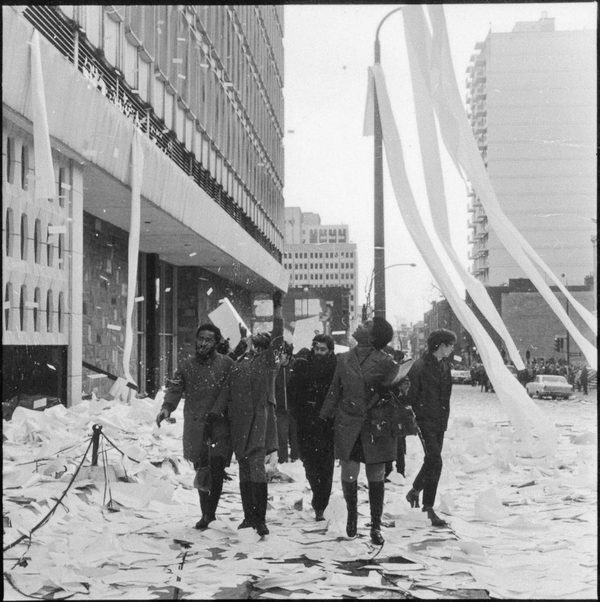
Student protesters at Sir George Williams University in Montreal, with punch cards thrown from the windows of the ninth-floor computer center littering the ground.
Brand spent her early years in Toronto “getting the hang of the city, drudging it out at several dead-end jobs and raising my consciousness in arguments, at study groups, in a Black students’ organisation, at community events and partying, which ended up being the same as studying.” She attended African Liberation Day meetings in the UNIA Hall on College Street, where “the Sino-Soviet split drew a line down the middle.” (Though, she remembers, “I had as much of a good feeling for Mao as for Lenin”; and besides, communism had come to the poet much earlier—a way to reimagine the fates of people she’d grown up with, people who labored in coconut, cane, and oil fields, and who never saw the profit they created.) She read literature of Black traditions that functioned, she writes in Salvage, “as a salve, as a balm, as a map, as a trace, as an analysis, as a hypothesis, about the coming of freedom from within what is circumscribing and possibly fatal.” She danced and organized and wrote poems, and found herself alongside people who knew culture to be a critical part of anti-imperial movements. Among her new comrades was the journalist Harold Head, who had been banned from apartheid South Africa, and whose press, Khoisan Artists, would publish Brand’s first book, ‘Fore Day Morning, in 1978. (“Juvenilia,” she called it, exempting the volume from her collected poems.) On Bathurst Street, in the heart of Toronto’s Black community, she found a kind of home—reveling in the dashikis and Panther blue shirts and big gold hoops while awaiting a friend, or asserting a brief architecture in the air as she called out ebulliently to a comrade, or distributing pamphlets to passersby that insisted police violence must end or Angela Davis should be free. The subways rumbling below were “portals through which we all passed, passing from Negroes into Blacks, from passive into revolutionary,” she writes in Bread Out of Stone. “Bathurst was the site of new definitions.”
After graduating with her bachelor’s degree in 1975, Brand began working at the Black Education Project in Toronto, supporting students facing the endemic racism of the public school system. It was there that she met Marlene Green, who became a close friend and comrade—and whom, in 1983, Brand followed to the island nation of Grenada, where a revolutionary socialist experiment was underway. (“In all that living [in Toronto], there was a sense of internationalism,” Brand told me. So when the revolution happened in Grenada, going there was “the simplest of moves.”) In 1979, the vanguard of the Marxist-Leninist New Jewel Movement had overthrown Grenada’s authoritarian Prime Minister Eric Gairy. With Maurice Bishop, a widely beloved young lawyer, at the helm, the swiftly formed People’s Revolutionary Government implemented a spate of transformative social programs from literacy initiatives to free healthcare. Thousands of people packed into town squares and conference halls from St. George’s to New York City to hear Bishop affirm Grenada’s sovereignty and connect its struggle to Cuba, Nicaragua, Vietnam, and to every place where people sought to cast off imperial domination. Over radio airways, Bishop’s message rang out: “We are not in anybody’s backyard, and we are definitely not for sale.” As the anthropologist David Scott writes in Omens of Adversity, this small country of 110,000 people constituted “an unprecedented symbol of the possibility of breaking with the colonial and neocolonial Caribbean past.” For 10 months, Brand worked as an information officer for the Agency of Rural Transformation, writing a newsletter about the island’s revolutionary activities, which was distributed to leftist groups across the Caribbean.
On October 19th, 1983, a great clamor woke the poet from a feverish sleep. Internal disagreements had fractured the revolution’s leadership, and three days earlier, a dissenting faction had placed Bishop under house arrest. Now a throng of supporters had freed the prime minister. Brand made her way to Market Square, where a dense crowd had gathered, then up the steep hill toward Fort Rupert, the headquarters of the People’s Revolutionary Army. She saw them there: Maurice Bishop, his silhouette conspicuous in the shadowy doorway; Jacqueline Creft, the Minister of Education and Bishop’s partner, clad in yellow, waving her cigarette spiritedly as she talked. People were laughing, celebrating. “The atmosphere,” she writes in A Map to the Door of No Return, “was ripe with possibilities.”
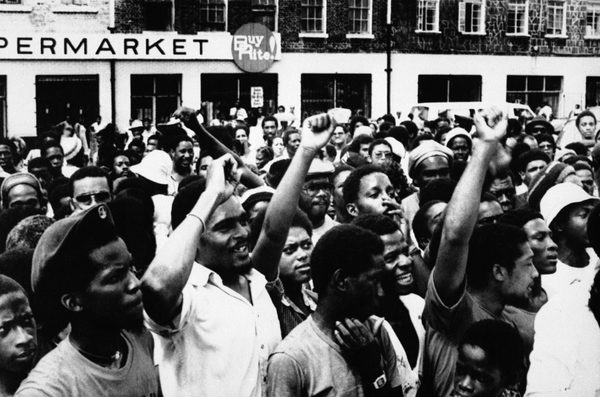
A crowd gathers in Market Square in Grenada in support of Prime Minister Maurice Bishop, October 1983.
Brand returned to Green’s house in search of her friend. In the minutes since Brand had left Market Square, a battle had erupted as Bishop’s detractors attempted to regain control of the site. Gunshots cracked the air, fast and staccato. From Green’s balcony, Brand watched as people leapt from the cliff, their bodies knocking limply against its side. Green rushed into the house. The women stood together, looking out toward the fort; just then, though they could not see it, members of the army were dragging Bishop and seven of his associates into the courtyard, where they were shot to death. (The exact circumstances remain unclear.) In her poem “October 19th, 1983,” from her 1984 collection Chronicles of the Hostile Sun, Brand remembers that day: “Maurice is dead, Jackie is dead /
[. . .] / dream is dead / lesser and greater / dream is dead / in these Antilles.” Six days later, US planes landed on the island. “This part of the story is history,” Brand writes in A Map to the Door of No Return. “The coup took place, the Americans invaded. That was the end of the socialist path in Grenada and the English-speaking Caribbean.”
As Grenada’s inhabitants moved stiffly through days truncated by curfew and defeat, Brand felt a familiar schema bear down. She had come to the revolution, she later wrote, in search of “some relief from the enclosure of the Door of No Return. That’s all. But no.” As in the previous century, new legal orders curbed the possibility of liberation. After the abolition of plantation slavery in the US, Reconstruction and Jim Crow had reorganized white domination to ensure its endurance; now, Scott explains, as part of a broader program of late-Cold War Western imperial consolidation, the US and its allies, who figure themselves as liberal democracies, collapsed diverse social formations—from apartheid to socialism, from military dictatorships to communism—into the single category “illiberal.” In so doing, they solidified a lexicon for their own “special, universal political claim—namely, the idiom of ‘human rights’” that entitled, even compelled, Western powers to refashion the world to suit their self-interest. It was a terrible echo: “Each push by the formerly enslaved is an eruption of a potential Black freedom,” the scholar Rinaldo Walcott writes in The Long Emancipation, “but each push is also contained by the juridical and legislative elasticity of the logic of emancipation as partial, as incremental, as apprenticed.”

US troops during the invasion of Grenada, October 1983.
This logic was everywhere, if you attuned yourself to it: The invasion, Brand told me, heralded an era “when, from a certain vantage, it seemed that centers of imperialism were affording what they called ‘rights’ to people; but, if you really looked, you could see that in most places, US empire was tightening its grasp.” By then, Ronald Reagan, Helmut Kohl, and Margaret Thatcher were in office—the conservative triumvirate in the US, West Germany, and England at work securing the “triumph of corporate capitalist consumer culture . . . and the disappearance/eradication of collective action,” as Brand describes the time in A Kind of Perfect Speech. “I saw how agile capital was—that it could absorb something and spit it out again as something else, that it could swallow up and redistribute its antagonisms,” she told me. In Grenada, people had briefly forged another we, shattering the fastener that fixed the future according to a singular story of the past. The revolution had torn open the world; the invasion had sutured it shut. Brand explained, “Poetry thickened in me after that.”
The revolution had torn open the world; the invasion had sutured it shut.
In the wake of defeats of leftist uprising across the globe, Brand was tasked with “working out, in language, what has survived the death of her politics,” Sharpe writes in the introduction to Brand’s Nomenclature: New and Selected Poems. Indeed, the late 1980s saw what Sharpe calls “the enlargement of the flaccid (il)liberal democracies,” and by the early 1990s, Brand and her comrades found themselves “battered by multicultural bureaucracy, co-opted by mainstream party politics, immersed in everyday boring racism,” as the poet laments in Bread Out of Stone. From her living room in Toronto, Brand, who had begun teaching in the English department at the University of Guelph, watched the news as the US led a 42-country coalition against Iraq. As American bombs obliterated the ordinary for Iraqis, she felt a horrible resonance: The onslaught sounded on a frequency with the ways that “the small daily life of Black people is constantly being overpowered by the regime of racism,” she recalls in a conversation with the writer David Naimon on his podcast Between the Covers.
Poems offered a place where the daily could live. In Inventory, a book-length poem published in 2006, Brand reckons with this time when “the science-fiction tales of democracy” were, yet again, fortifying a feedback loop between the past and the future—decimating life for those under imperial force via numbers “so shapeless, apart from their shape, their seduction of infinity.” This cruel accounting, Brand explained to me, “is what we’ve been captured by entirely. How, then, to tell the story in the interstices of those numbers?” In Inventory, a woman “losing the idea / of mathematics” stays awake night after night “to keep watch at the window / of the television” where statistics ferry Iraqis across the ocean, bound to their deaths—“twenty-seven in Hillah, three in fighting in / Amariya, two by roadside bombing, Adhaim.” As the woman searches for “another life . . . behind the flat screen and the news anchor,” the statistic’s sleek encasement cracks, revealing textured particulars
she’s heard clearly now, twenty-three,
by restaurant bomb near green zone, Ibn Zanbour,
and so clear, syntonic, one, threading a needle
three beating dust from slippers, anyone looking
for a newspaper, an idea in their head like figs will soon
be in season, four playing dominoes, drinking Turkish coffee
seven by shop window, with small girl, in wading pool,
twelve half naked by river, nine shot dead in
Missouri shopping mall, possible yes, in restaurant
in Madison, three nephews, one aunt in Nashville fire bomb
By way of the details, militarized borders concede to a wider geography: Missouri, Madison, Nashville, everywhere pocked with passing concerns (“where’s the hair oil, / the butter’s gone rancid, remember that cat we used to have”). As this restoration of the quotidian slackens the hold of assigned meaning, it rejects the foregone “over there”—the brutal abstraction that reduces a city of millions of people to “a big spot [on a map] where some terrible idea [was] being wiped out,” as Brand described the mainstream media’s depictions of Baghdad on Naimon’s show—and dispels the absolution contrived by innocence’s proposition that, for some, it is possible not to see. Probing the legend of empire’s delusional map, where brutality is dubbed common sense, Inventory reminds us that careful attunement to entanglement might offer an antidote to indifferent destruction.
On that walk last summer, Brand and I stopped at the corner of Bloor and Dufferin, where a poem she wrote is published on a pair of benches. A seated man concealed the text, his face etched with the familiar weariness of someone who has no place to set things down for long. As we continued on, Brand remarked, “This is not a beautiful city”; over the past decades, the cruel alchemy of financialization has transformed housing from basic need into coveted asset. Briefly, though, the poet had glimpsed the possibility of reconfigured relation—the rudiments of another way. During the onset of the Covid-19 pandemic, she reflected, “for a moment, the powers that be were disturbed. Suddenly they had to deal out a certain kind of care.” The virus, she writes in Salvage, fleetingly occasioned “the uncomfortable recognition of the ‘we’—of its geological whole. We suddenly felt the earth as if our feet were on the same shaky surface.” That is, “until the stock markets corrected themselves; until commentators reclaimed the racist narratives of difference,” and we resumed “our ongoing right-sliding toward a killing, stratifying, death-dealing normal.” Normal: an eagerly evangelized dream of a return—a word that, like “goodness” and “success,” “beautiful” and “gentlemen” in the British texts Brand read as a child, stashes a world of violence, recasting “the global state of emergency of antiblackness,” as Brand called it in the Toronto Star in 2020, as coveted virtue.
In writing poems, Brand explained, one must ask: “What is the jangle you’re trying to make of all the things people already know? What is the new arrangement?”
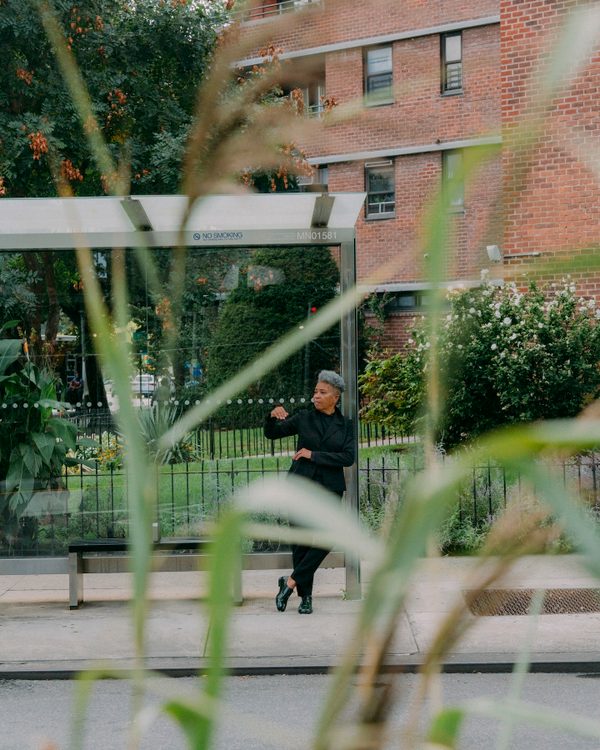
At the beginning of the pandemic, Brand wrote a long poem, “Nomenclature for the Time Being.” The poem diagnoses and disperses this extractive we—the we that binds those of us who “have the means” to those who “are the means by which others extract and consume,” as she writes in Salvage—by proceeding from a different kind of self. The poem’s speaker, Brand clarified in a 2020 lecture, is “a Black aesthetic,” which, as in the transformative exertions of ’70s Bathurst, is “open to multiplicity, to variation, to movement, to opacity, and to calibration.” This speaker is neither exempted from nor defined by imperial terms:
we read their books, as I said earlier, took
in their alphabets like popsicles and lesion paste
it is a good thing that they don’t know who we are
Language, Brand reminds us, is a social practice, a kind of we. And as with all wes, it is manifold in its gathering. When I say cat or green or bread, what each of those words calls up for me is likely different than what it summons for you. No matter, though, that cat immediately brings to my mind my pet’s speckled face, for you, perhaps, a tabby emerging from the rubble of a bombed building or the cartoon rendering of a disembodied head floating under the letter C on the wall of your kindergarten classroom. We meet there, our various histories jostling inside the name. As Blackness, Hartman noted in a conversation with the poet Victoria Adukwei Bulley, “doesn’t presume any unanimity of culture, or reference,” so too might the multifarious we of language, if loosed from the grammar of domination, refute the cruel mathematics of the ledger, where the meanings of difference are prescribed and managed, where value is determined, definition secured. Puncturing the enclosure of certain meaning, of what Hartman called in our conversation “the incredible parochialism of a certain kind of imperial metropolitan subject who would imagine that their narrowness is the world,” Brand instead reaches for “the whole immaculate language of the ravaged world,” as she writes in Inventory. In writing poems, she explained on our walk, one must ask: “What is the jangle you’re trying to make of all the things people already know? What is the new arrangement?”
“For me, the line is the most crucial unit of a poem,” she told me. “It hovers. It is full in its proposition”—like revolution, the we suspended, total in its possibility. In A Map to the Door of No Return, Brand recalls those final hours in Market Square, dense with potential: For a brief time, “everything, every minute was a surprise. I was sure of nothing, though I was hopeful throughout . . . And I gave up all thoughts, all of my movements, to this hope. . . . I was less determined than the crowds of people.” This throng cancels the ledger, nullifies accounting. In revolution, as in a line of poetry, meaning is flung open: “You are,” Brand writes in Bread Out of Stone, “making yourself for the future, and you do not even know the extent of it when you begin.” The terms of subject and object, of sovereign and Other, are undone. The grammars that secure hierarchies and constrain possibilities are loosened—the structures of relation thrown up for grabs.
Dionne Brand is looking toward the site of a sound I can’t hear. We are standing outside her brick house. I follow the poet’s gaze up to the roof of her house. Once I see the robin, I, too, hear its sharp alarm. Lines from “Nomenclature for the Time Being” unspool in me: “In many trees along particular roads, we heard // some sound we did not recognize since / there was no noise to cover it.” What I couldn’t hear now resounds indelibly. The world has terribly reconstituted itself. There is always a tear in the world.

I’m Arielle Angel, editor-at-large of Jewish Currents. Before you go, there’s something I need to ask.
We’ve seen over and over how the mainstream media falters in telling stories on our beats—whether it’s antisemitism, Israel/Palestine in American politics, Jewish identity, or the American left. At Jewish Currents we’re committed to uncompromising analysis and longform reporting on these issues and more—stories you won’t find anywhere else. In a media landscape that obscures injustice and flattens discussion, we’re changing the conversation. But we need you.
If you believe in this work, please consider making a donation—or even better, a recurring one—to ensure that we are able to keep publishing stories like this one. We can’t do it without you.

Claire Schwartz is the author of the poetry collection Civil Service (Graywolf Press, 2022) and the culture editor of Jewish Currents.