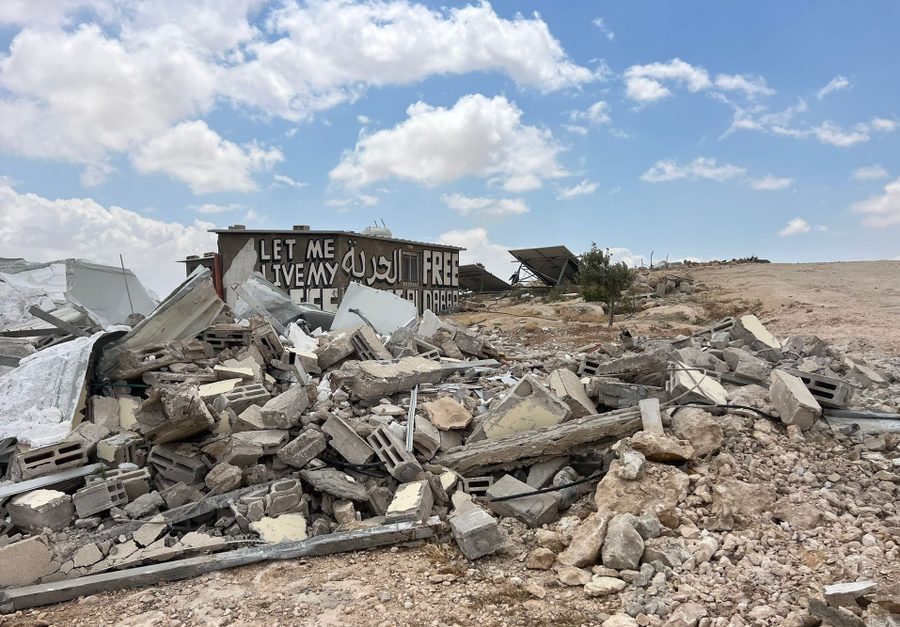
Ruins in the West Bank village of Khalet a-Daba’ on May 5th, 2025.
Eid SuleimanThe Destruction of Khalet a-Daba’
The largest demolition in the history of Masafer Yatta in the southern West Bank portends an escalation of Israel’s ethnic cleansing campaign in the region.
In the early morning hours of May 5th, two large excavators and two bulldozers rolled over the hills of Masafer Yatta and into the village of Khalet a-Daba’. In under two hours, Israeli military forces demolished nine houses, six residential caves, 11 bathrooms, ten water tanks, seven water cisterns, four animal shelters, an electricity room, the majority of the village’s solar panels, and the community center. By the time the army left, only four structures remained; 90% of the village was in ruins. As the head of the settler South Hebron Hills Regional Council, Eliram Azulay, wrote on Facebook the following day, the “historic demolitions” are part of an attempt to achieve Israeli “sovereignty in the South Hebron Hills”—an intentional strategy to consolidate Israeli control over the West Bank by removing Palestinians from the rural regions known as Area C and annexing the territory to Israel.
“This is the first time I’ve seen a demolition where families really have no place to go afterwards,” said Basel Adra, a Palestinian journalist and filmmaker from Masafer Yatta, who was present at the demolition. “Caves are now blocked by piles of rubble; homes are gone. There is no shelter at all, and the summer heat is coming.” The small village, home to some 120 people, is known for its cultivation of almond, grape, and olive trees—a pocket of lush greenery nestled in the arid hills of Masafer Yatta. The village was also distinguished by large murals on many of its structures—a project launched with international solidarity activists to draw attention to the community’s struggle for survival. In bold white lettering, the murals proclaimed: “Free Khalet a-Daba’” and “We Deserve Life.”
Like other neighboring villages, the community has consistently weathered violent home demolitions and settler attacks. Since October 2023, settlers have attacked the village several times, injuring residents, destroying cars, and, in one case, burning down a home. The location of Khalet a-Daba’ makes the village particularly vulnerable: The community is one of 12 villages in Masafer Yatta located within the borders of “Firing Zone 918,” a swath of land that Israel designated a military training zone. Following a decades-long legal battle, the Israeli Supreme Court approved the forcible transfer of more than 1,000 residents from these villages on May 4th, 2022, almost exactly three years ago. Tellingly, Khalet a-Daba’ is surrounded by four Israeli outposts, all located within the same firing zone. Despite their illegal status under both international and Israeli law, these outposts have continued to expand with state support since the 2022 ruling.
After the Supreme Court decision, residents of Firing Zone 918 feared Israel would immediately expel them from their land. Instead, the state implemented a slow and calculated campaign of ethnic cleansing targeting the region as a whole and these 12 communities in particular, attempting to make life untenable for residents through road closures, home demolitions, and coordinated efforts with local settlers to block Palestinians from accessing their land. The demolition of Khalet a-Daba’—the largest ever carried out in Masafer Yatta—marks the state’s first clear attempt to actualize the Supreme Court’s ruling by trying to expel one of the 12 villages in its entirety. Residents fear that this step foreshadows an escalation in Israel’s campaign of expulsions and forced transfer across the region—the intensification they have nervously anticipated for the last three years.
This photo essay—comprised of photos by Basel Adra, Eid Suleiman, Omri Eran Vardi, Oren Ziv, and myself—offers a glimpse at life in Khalet a-Daba’ before, during, and after its recent destruction. In one image from November 2023, Jaber Dababseh walks in front of his home, which displays a mural saying, “If this sign falls, it will be the sixth time this house has been demolished.” That home now lies in rubble. As this photo essay was going to press, a masked settler entered what remains of Khalet a-Daba’ and attacked Dababseh’s brother, inflicting a severe head injury. When an ambulance arrived, the Israeli army blocked it from providing care and then proceeded to arrest Dababseh and his cousin.
In an interview with +972 Magazine in the hours after the demolition last week, Dababseh’s mother, 80-year-old Amna Dababseh, said, “I will never leave this village—not until my last day.” One wonders how much more they will have to endure, how many cycles of destruction they can withstand, to stay on their land.
— Emily Glick
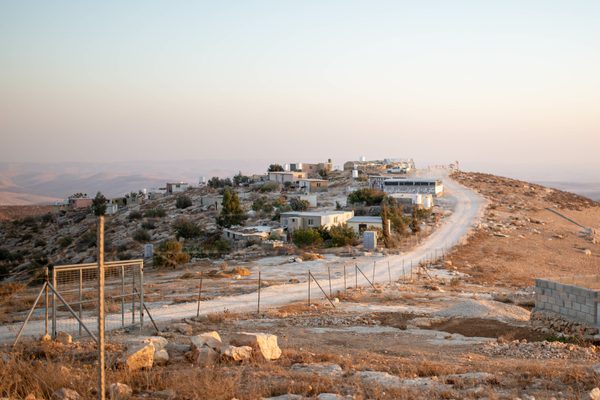
Khalet a-Daba’ at sunset, October 11th, 2022.
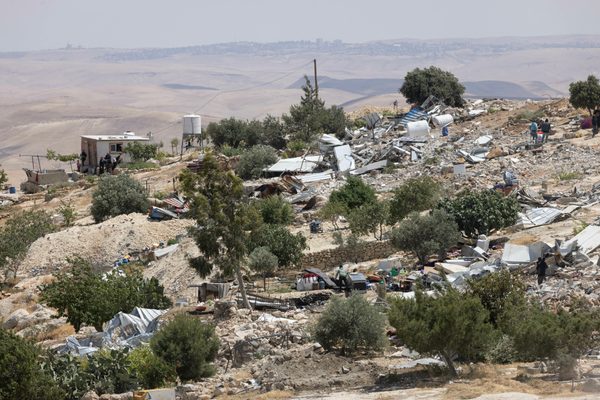
After the demolition, May 5th, 2025.
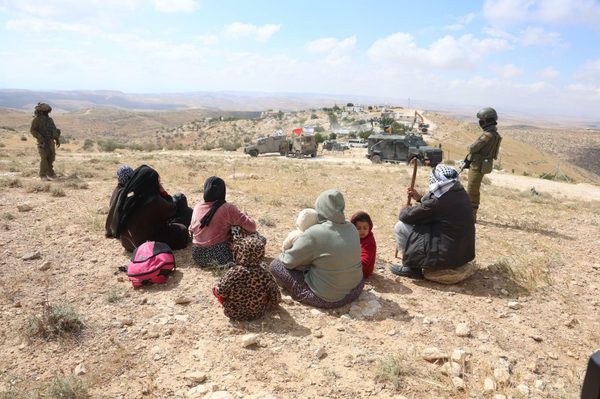
Residents of Khalet a-Daba’ watch the demolition of their homes from a distance after Israeli soldiers forcibly remove them from the village, May 5th, 2025.
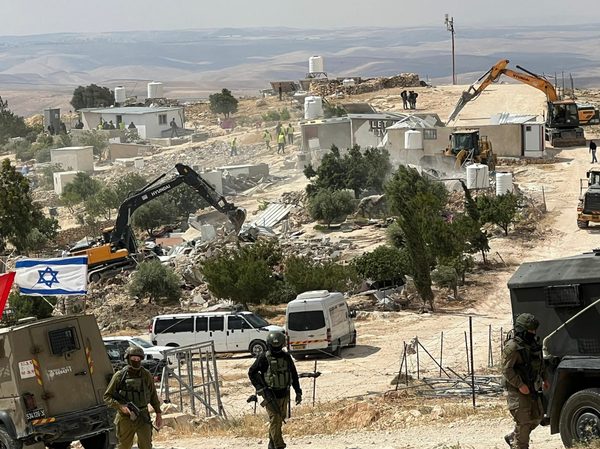
Israeli soldiers stand in front of Khalet a-Daba’ while bulldozers begin demolishing the village, May 5th, 2025.
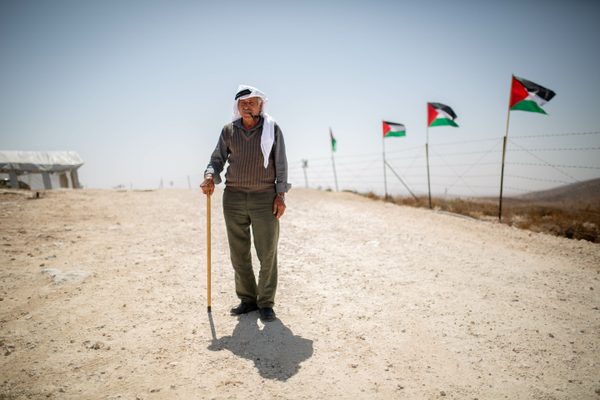
Badawi Dababseh, a resident and community leader of Khalet a-Daba’, September 29th, 2022.
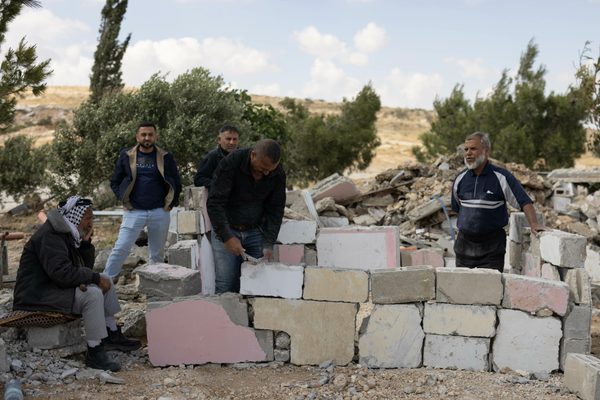
In the aftermath of the demolitions, men from the community try to piece concrete blocks back together in order to shelter the community’s elders from the harsh winds, May 5th, 2025.
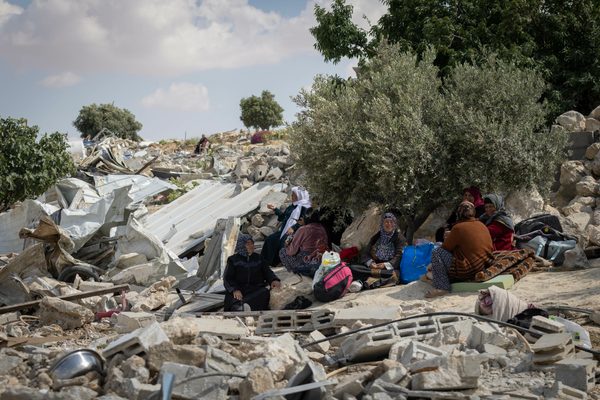
Residents of Khalet a-Daba’ seek shade from an olive tree, surrounded by the ruins of their homes, May 5th, 2025.
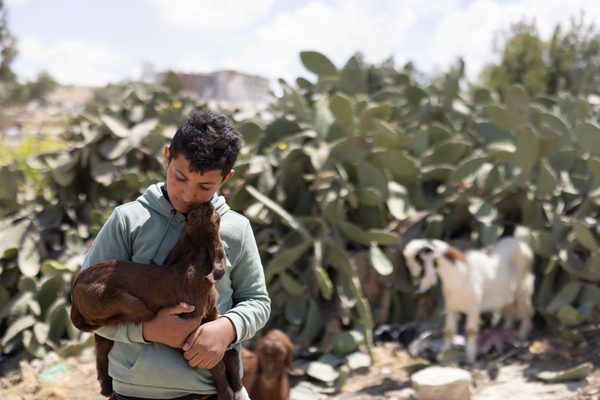
A resident of Khalet a-Daba’ holds a baby goat after the Israeli army demolished the village’s animal pens, May 5th, 2025.
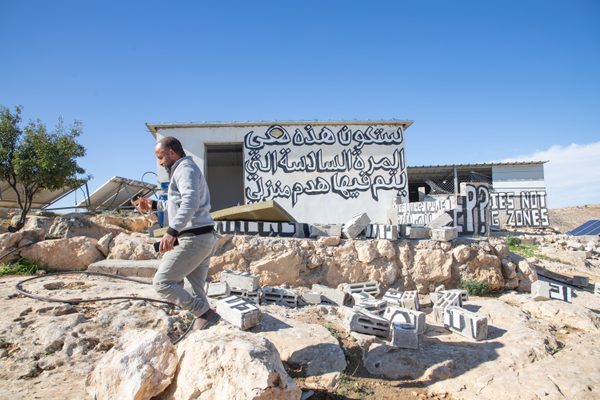
Jaber Dababseh in front of his home, the wall of which reads, “If this sign falls, it will be the sixth time this house has been demolished,” November 2023.
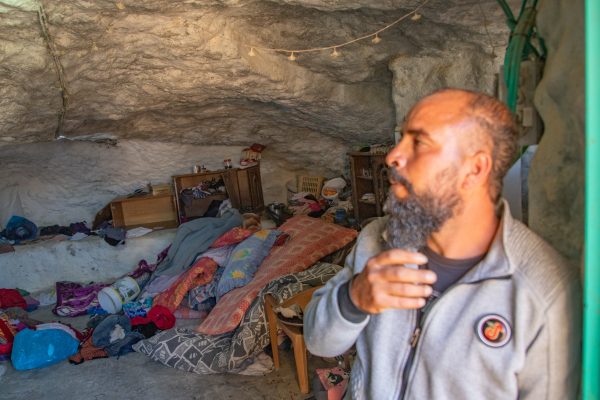
Jaber Dababseh stands at the entrance of his cave after settlers ransacked the village, November 2023.
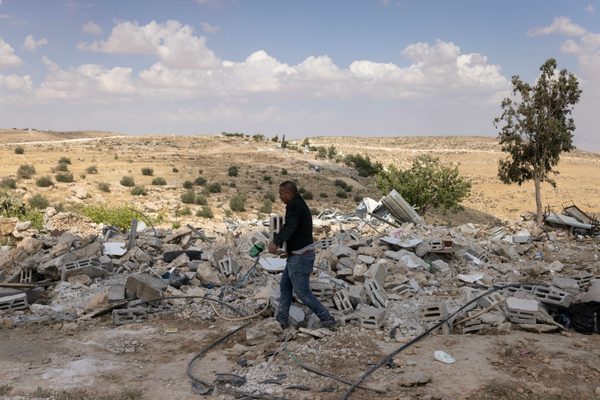
After the demolition, May 5th, 2025.

I’m Arielle Angel, editor-at-large of Jewish Currents. Before you go, there’s something I need to ask.
We’ve seen over and over how the mainstream media falters in telling stories on our beats—whether it’s antisemitism, Israel/Palestine in American politics, Jewish identity, or the American left. At Jewish Currents we’re committed to uncompromising analysis and longform reporting on these issues and more—stories you won’t find anywhere else. In a media landscape that obscures injustice and flattens discussion, we’re changing the conversation. But we need you.
If you believe in this work, please consider making a donation—or even better, a recurring one—to ensure that we are able to keep publishing stories like this one. We can’t do it without you.

Emily Glick is photojournalist and visual storyteller based in Boston.