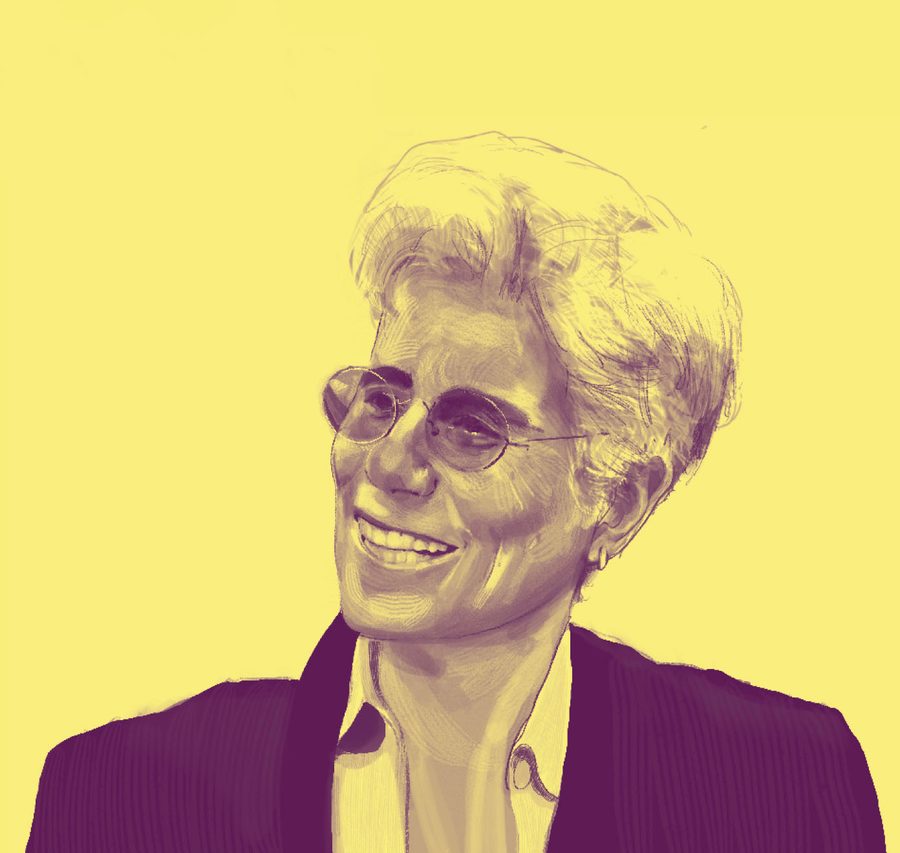

I first met Laura Whitehorn on a dreary January morning in Albany, New York. Hundreds of us—primarily formerly incarcerated people and loved ones of those currently on the inside—had traveled from across the state to advocate for parole reforms. In small groups, we met with legislative staff members, and by luck, I was assigned to Laura’s group. We had come that day to drum up support for two particular bills, but we were part of a broader movement—one that seeks to end the brutal system of punishment that is prison; it was this deeper clarity of purpose that steeled Laura. I watched her look straight into the eyes of each person we met with a courage of conviction that stiffened spines, brushing away readily offered excuses and demanding unequivocal commitments from our reluctant interlocutors.
For more than six decades, Laura has struggled against racism, misogyny, and other forms of structural oppression. In 1971, she helped organize a ten-day occupation of a Harvard University building that led to the creation of the area’s first women’s center. In 1974, after courts ordered the desegregation of Boston Public Schools and white mobs routinely retaliated with violence, Laura spent two years committed to “house defense,” guarding the homes of terrorized Black families with a baseball bat. She was a member of the Weather Underground Organization (WUO), a militant anti-racist organization of white student activists, and in 1983, she—together with other members of the May 19th Communist Organization, a splinter group of the WUO—took part in bombing the United States Senate in protest of the military intervention in Grenada and Lebanon. The group targeted several other government buildings over the course of the following two years, taking great care to ensure that no one was harmed. Their actions—alongside those of the Black Liberation Army—became a synecdoche of US leftist militancy in the popular imagination.
In 1985, Laura was arrested, and over the 14 years she spent incarcerated, she continued to organize, agitating for better conditions inside prisons and directing an urgently needed AIDS education program. “To risk changing your life, as anyone who’s a political prisoner has done, you have to have a vision of what you’re fighting for; and that vision, whether you think you’re going to win it in your own lifetime or not, has to be as real and as strong in your heart as the comforts you’re giving up,” she explains in the documentary Out: The Making of a Revolutionary. Since her release in 1999, Laura has remained unwavering in her commitment to a world liberated from imperial powers, active in movements from Palestine solidarity to prison abolition. In 2013, she co-founded Release Aging People in Prisons (RAPP)—a grassroots campaign that advocates to free incarcerated elders and others serving long sentences, and the group that brought us together on that winter day in Albany—with formerly incarcerated activist and Weather Underground member Kathy Boudin, activist and former jailhouse lawyer Mujahid Farid, and civil rights attorney Soffiyah Elijah.
I spoke with Laura about the process of coming into her political sensibility, how she understands the relationship between nonviolent protest and armed struggle, and how her own experience in prison informs her commitment to a free Palestine. Her life in the struggle for liberation, she told me, has made her “the luckiest person alive.” This interview has been edited for length and clarity.
Nick Barber: In your introduction to the collected works of Black liberation activist Safiya Bukhari, you explain that Safiya includes personal details in her writing only insofar as they explicate “the necessity to fight for justice.” I know you, too, are loath to share biographical details without a clear sense of utility, but within the parameters you outlined, what can you tell us about how you were radicalized?
Laura Whitehorn: Growing up in a liberal Jewish household, my father explained that what was happening to Black people in the United States was not that different from what had happened to marginalized groups under the Nazis. So starting in my youth, I supported the civil rights movement, and in college I became involved with groups like the Northern Friends of SNCC [the Student Nonviolent Coordinating Committee], raising money for the people at the forefront of that struggle.
In 1968, I moved to Chicago to pursue a PhD in English literature. One day I was sitting by the window in my apartment, pretending to read Paradise Lost, when I saw a young Black man assaulted by police. He was walking down the street, minding his own business, when a couple of cops jumped out of a car, threw him up against the vehicle, and started terrorizing him. Little liberal that I was, I ran out and started yelling at them: “What are you arresting him for?” Of course, they just threw me out of the way. I was totally ineffective. That experience changed something in me. Up to that point, I had believed what I had been told as a kid—that we just had to teach white people until someday, they stopped being racist. But now, I saw: We were engaged in a struggle for power, and the answer to racism was not white education, but Black power.
“We were engaged in a struggle for power, and the answer to racism was not white education, but Black power.”
After that, I worked with the People’s Law Office, which my husband at the time helped start, supporting the legal team of Fred Hampton [deputy chairman of the national Black Panther Party] when he was accused of assaulting the driver of an ice cream truck and stealing $71 worth of Good Humor bars, which he intended to distribute to kids in the community. Fred said that if these white lawyers were going to do this work, they should have a real political education—so he started a study group for the lawyers and their partners, which I participated in. Later, I began to put my body on the line: Police raids were escalating across the country, and I was part of a group of white people tasked with helping defend the Panther office in Chicago. I remember standing behind barricaded doors with a shotgun. I had never held a gun before—my hands were shaking! It was one of the scariest nights of my life. Luckily, the police didn’t come that evening.
NB: As you moved away from the liberal vision of the world you had grown up with, how did you conceive of the relationship between revolutionary armed struggle and mass movement work?
LW: To enact transformative change, people must rise up in whatever forms are necessary to overturn oppressive regimes—so this question has different answers in different contexts. The anti-war movement of the 1960s, for example, was made up of various parts. The student movement aimed to end the war in order to end the draft; some of its members, most of whom were white, didn’t want to fight for an imperial cause, and many just didn’t want to fight, period. But these students were typically eligible to defer the draft to continue their educations. Many of the people who couldn’t avoid getting drafted were people of color. So some of these folks led the other, fundamentally more powerful but often-forgotten strand of the movement: During the war, many Black and Puerto Rican GIs led resistance efforts; fragging [killing or sabotaging military superiors, often by throwing a fragmentation grenade] also became increasingly common. And there were many other militant actions at the time, including thousands of small bombings of buildings across the US. This swell of action communicated to the general populace that violence wasn’t something injected into the situation by a small group of activists; it was an organic response to what people were seeing abroad: The United States was carpet bombing Vietnam. A lot of young people like me were beginning to apprehend the full scale of brutality that underlies the whole system. And we were responding in kind.
NB: I want to talk a bit about the moment after the end of the Vietnam era, when the mass anti-war movement waned even as imperial wars continued. How did activists at the time navigate this landscape?
LW: After the war in Vietnam ended, many people who had taken part in the white anti-war movement retreated into local organizing because they were no longer threatened with the draft. But Che Guevara had urged people around the world to “create two, three, many Vietnams”—to proliferate the fight against US imperialism—and my comrades and I took this very seriously. Anti-imperialist organizing was at the heart of our fight against white supremacy. We had a slogan: The power of the people is greater than the man’s technology. That is what we had seen in Vietnam: The power of the people had defeated the most powerful army in the world. That was what I wanted to be part of.
We targeted sites that were significant to the imperial wars in which the US was involved [for example, in 1984, bombing the offices of Israel Aircraft Industries in New York and the officer’s club at the Washington Navy Yard]. Our understanding—and I still believe this to be true—was that when the US government was most militarized on a global scale, they also made themselves vulnerable to attack. And so, we tried to exploit that vulnerability in order to turn public attention to the horrors of US imperialism.
NB: After you were arrested in 1985, you continued to organize from inside prison. It would be great to hear about that work, undertaken as you found yourself incarcerated alongside a cohort of other activists and revolutionaries.
LW: Being inside together comes with amazing possibilities, even under the most difficult circumstances. For example, my comrades and I taught classes in our facilities, correcting for what is not taught in public schools—helping people with reading and writing, but also sharing the history of radical movements, especially the Black liberation movement. Learning about the Black Panther Party in prison, where you are directly under the thumb of the power that you’re studying, is very different than, say, chatting about that history at a potluck at a friend’s home. Inside, you intimately feel not only the structures of oppression, but also the need for resistance—so by bringing that education into enemy territory, the prison system, we were building our collective power. For example, because we understood the history of reggae music in contesting colonial control, we sang Bob Marley songs and refused to go in for count in Lexington [Kentucky’s Federal Medical Center Prison].
“Learning about the Black Panther Party in prison is very different than, say, chatting about that history at a potluck.”
And we were far from alone in feeling like this education was transformative. I often think of Jose Saldaña [director of RAPP] and Stanley [“Jamel”] Bellamy [RAPP community organizer], who were in prison together. Each served almost 40 years. They were part of the Resurrection Study Group that Eddie Ellis, who was a Black Panther, started—and they talked about how Eddie challenged their thinking. He helped them to understand themselves as part of a struggle, as part of a people. When you learn in this way, it really clicks into place: You are here because you’re part of that people. Society wants you to stay here and die, but you want to get out and live for the good of your people.
NB: Your experience as a political prisoner connects you to a global geography of anti-imperialism—and I’d love to talk specifically about Palestine. I was at an event that RAPP co-hosted with an international network of organizers working in solidarity with Palestinian prisoners, where participants made connections between political prisoners here and political prisoners there. Can you say a bit about why these connections among people facing repression in different contexts are important?
LW: The anti-imperialist organizations I was part of in the ’70s were all committed to Palestinian liberation, and I have long been, too; but my commitment was really fortified in 2016, when I traveled from the US to Palestine with a group of former political prisoners and activists. The resonances were very powerful. There were a number of Black organizers on our trip—including Hank Jones, who had been part of the San Francisco 8 [a group of former Black Panthers against whom the state had attempted to reopen a 36-year-old case]—and they all felt the similarities between our own context and what we were seeing in Palestine. One night, people told us about the experiences of Palestinian children in the West Bank; we met with the family of Mohammed Abu Khdeir, who shared with us about how he had been kidnapped by settlers, forced to drink gasoline, and then set on fire. As he listened, Hank, who grew up in the South, was brought immediately back to his own youth. He recounted how the Klan burned crosses on the front yards of his family and neighbors. As a child, he had been told: “Don’t walk down that street at night, because another young Black man was lynched there the week before.”
As far as political prisoners, I had always understood that they existed in Palestine—there are political prisoners in every revolutionary movement—but what amazed me on the trip was that every single person we met had a family member in prison, or had themselves been in prison, and we met a lot of people. And because incarceration was such a pervasive part of Palestinian experience, nobody wondered why we were there. There are a lot of places where, if I tell people I was a political prisoner, they will ask in surprise: “The United States has political prisoners?” No one said that in Palestine.
We visited a military tribunal. As we waited to go into the court, we could see the families of the defendants waiting, too. It looked like a concentration camp—barbed wire and fences, hot sun, people sitting on the ground. The court proceedings were held in Hebrew, so most of the defendants couldn’t understand the discussions that would change the course of their lives. We went there with representatives from the Palestinian human rights organization Addameer, and they told us that these courts have a conviction rate of over 99%. It was a stark example of the depths of repression and the use of the law as a tool of ethnic cleansing.
All over the buildings in Palestine we saw pictures of political prisoners. One man explained that political prisoners keep liberation alive in our minds. By this, I think he meant not so much that these people undertook discrete actions that will liberate us, but rather that their ongoing resistance in contexts of utter confinement is a beacon that helps us continue our own resistance. It certainly redoubled my commitment to amplifying the struggles of political prisoners here in the United States.
NB: Given this long history of anti-imperial struggle and imperial repression, how are you thinking about the current movement to end the genocide in Palestine?
LW: We need to remember that the world is seeing the truth of Israel’s project of ethnic cleansing not because a group of students embarked on an education campaign, but because Palestinians materially confronted Israeli power. I’m not saying that to advocate any particular form of resistance—the shape resistance takes comes from the moment, the community, and what people are willing to sacrifice to change social relations. But it is important to note that every single movement that begins to be militant in the United States is faced with attempts to derail it. When people express support for broad anti-colonial resistance in Palestine, for example, they are often faced with obsessive questions that try to discredit Hamas as a legitimate representative of Palestinian struggle. That is a strategy to keep certain kinds of resistance off the table, and it is something we must push back against.
At the same time, effective resistance needs multiple modes, and armed struggle will ultimately not be effective if it is undertaken by a tiny group of people without connection to a mass movement. It can occasionally still be a symbolic victory. For example, I saw pictures of people lined up to get into a court hearing for Luigi Mangione [indicted in the killing of Brian Thompson, the CEO of UnitedHealthcare]. People were so furious that billionaires continue to control our welfare that they were willing to support Mangione, even though he had acted purely as an individual. But how do we get the people who were angry enough to come down to the courthouse for one day to actually organize—to be in the streets day and night, in freezing cold and sweltering heat? A lot of them probably wouldn’t; they would feel that people like Luigi can do the heavy lifting.
What is required now is militancy. Militancy is not a tactic; it’s a political stance that you believe in what you believe in, and you don’t throw it out because that commitment becomes riskier. We must have courage and not run for the hills.

I’m Arielle Angel, editor-at-large of Jewish Currents. Before you go, there’s something I need to ask.
We’ve seen over and over how the mainstream media falters in telling stories on our beats—whether it’s antisemitism, Israel/Palestine in American politics, Jewish identity, or the American left. At Jewish Currents we’re committed to uncompromising analysis and longform reporting on these issues and more—stories you won’t find anywhere else. In a media landscape that obscures injustice and flattens discussion, we’re changing the conversation. But we need you.
If you believe in this work, please consider making a donation—or even better, a recurring one—to ensure that we are able to keep publishing stories like this one. We can’t do it without you.
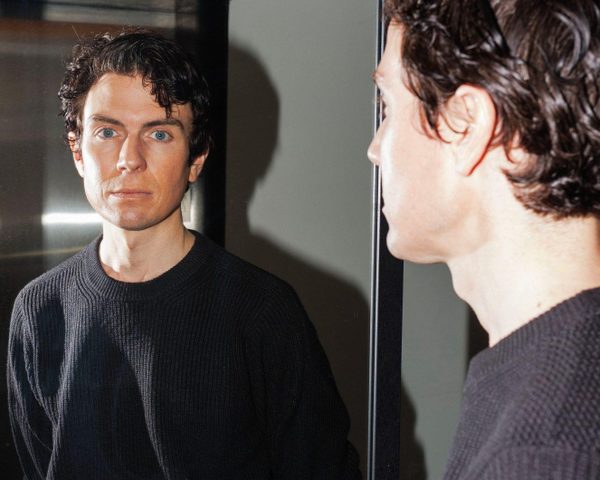
Nick Barber is a New York-based writer and organizer, with a focus on incarceration, criminalization, and punishment.