Letters / On “The Tangled Knot of Anti-Zionist Violence”
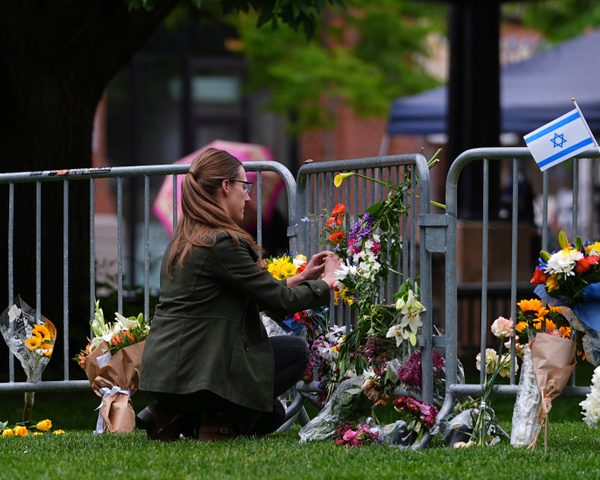
You are not likely to read a more thoughtful or historically sensitive reflection on how to respond morally and politically to the recent incidents of anti-Zionist violence than Daniel May’s latest essay, “The Tangled Knot of Anti-Zionist Violence.” May teaches us that Zionism catalyzed a transvaluation of Jewishness that makes prying the two apart a more burdensome ordeal than the average Currents subscriber might care to admit. At the same time, May cannot but conclude with an appeal to “recogniz[e] recent attacks not as evidence of an eternal hatred but as destructive responses to an unconscionable war.” Here he falls back into the lap of his readers, sapping the essay of its critical voltage.
In my view, the non/anti/post-Zionist left needs a working definition of antisemitism that goes beyond its comfort zone, in which antisemitism is only an annex in the palace of white supremacy. What is needed is a better theory of how it has happened that, in May’s view, American Jews in Boulder and Israeli embassy workers in Washington have ended up Zionism’s most recent victims. Recall that the Zionism of Leon Pinsker, Theodor Herzl, Max Nordau, and even Ahad Ha’am was not merely a transvaluation of Jewishness (as May rightly points out), but a transvaluation by way of the antisemite’s image of the Jew. For most early Zionists, diaspora Jews really were weak, effeminate, middle class, geist-less parasites. And so Zionism sought to defang antisemitism by taking seriously antisemitism’s view of Jewish deficiencies. This national exercise, understandable in its context, has borne strange fruit, and today, the world doesn’t like the new, strong, bullying Jews it helped create.
If a thinker as sharp as May doesn’t have a blade fine enough to cut the distinction between antisemitism and anti-Zionism, then it’s time to consider the question anew. No one will understand contemporary antisemitism until its profound entanglement with Zionism—and thus anti-Zionism—is taken seriously.
St. Louis, MO
I was disappointed to read Daniel May’s recent piece, which in the face of targeted violence against Jews, only lectures us once again on the importance of distinguishing between Judaism and Zionism. In doing so, he suggests it’s a lesser crime to murder Jews if accompanied by the phrase “free Palestine!”
At one point, May notes that the two low-level Israeli embassy employees were killed at an event put on by the American Jewish Committee, an organization he describes as a “staunch supporter of the Jewish state”; so, in May’s view, the attack was simply anti-Zionist, rather than antisemitic, in nature. That standard is an impossible one to use for distinguishing antisemitism from anti-Zionism. Though I wish it were otherwise, nearly every Jewish institution is a “staunch supporter of the Jewish state” by some definition. Given that, is it safe to attend synagogue? A Jewish community center? A Jewish summer camp? At what point can we say that killing Jews at Jewish events and in Jewish spaces is, in fact, antisemitic? Even if done in the name of a perverse anti-Zionism, this is a genre of violence against the Jewish community as a whole.
At a certain point, violence directed against Jews must be condemnable as antisemitism or else the term loses its usefulness. Judaism and Zionism are not the same, and anti-Zionism is not necessarily antisemitism, but neither is anti-Zionism a free pass to engage in antisemitic violence.
Washington, DC